
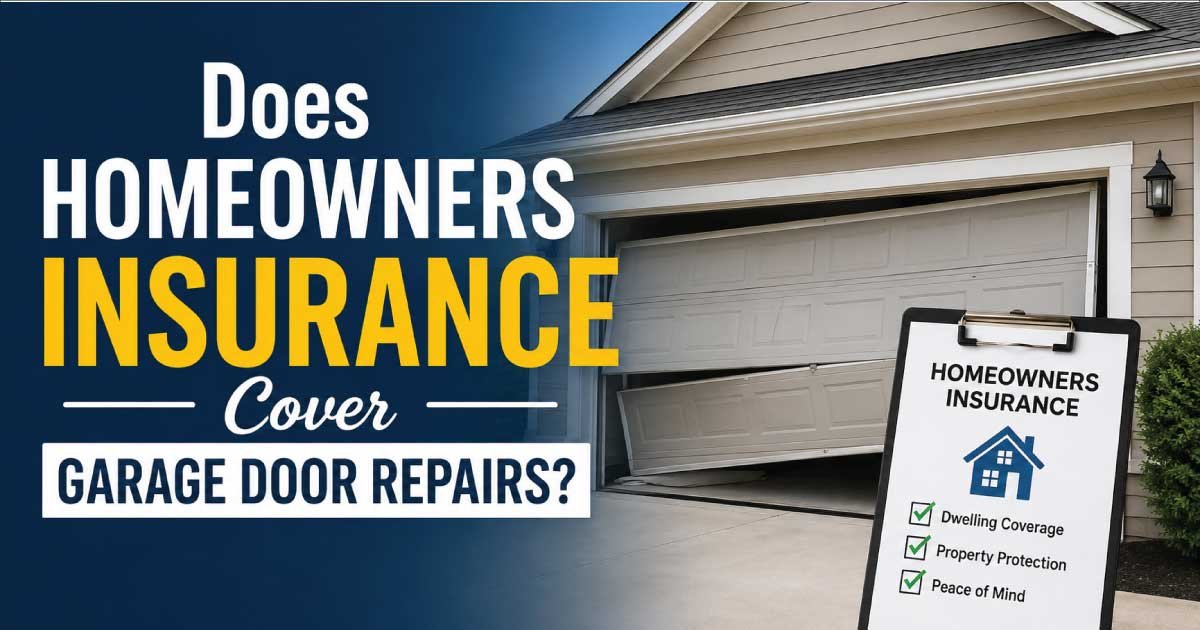
Does Homeowners Insurance Cover Garage Door Repairs?

A damaged garage door is more than an inconvenience. It can affect your home’s security, energy efficiency, and daily routine. Many homeowners assume their insurance policy will automatically pay for garage door repairs, only to discover that coverage depends on what caused the damage, not simply the fact that the door stopped working. Understanding this distinction can save you from unexpected repair bills and help you avoid delays when filing a claim.

If your garage door was damaged by a storm, a falling tree, vandalism, or another covered event, homeowners insurance may help pay for repairs or replacement. On the other hand, problems caused by normal wear and tear, poor maintenance, rust, or aging components are usually your responsibility.

In this guide, you’ll learn how homeowners insurance typically handles garage door repairs, how to recognize situations that may qualify for coverage, what warning signs to look for, and how to troubleshoot the problem before deciding whether to contact your insurance company or a garage door repair professional. By the end, you’ll understand both your insurance options and the practical steps to take when your garage door is damaged.


Common Signs and Symptoms

Before deciding whether homeowners insurance might cover garage door repairs, it helps to identify exactly what’s wrong. Some problems point to accidental damage that could qualify for coverage, while others suggest gradual wear that insurance policies usually exclude. Recognizing the symptoms early also helps prevent further damage and improves your chances of documenting a valid insurance claim.

Common signs include:

  • The garage door won’t open or close completely.
  • The door moves unevenly or appears crooked.
  • Large dents or impact marks are visible.
  • Broken or cracked door panels.
  • Bent or damaged tracks.
  • Broken torsion or extension springs.
  • Snapped or frayed lifting cables.
  • The garage door opener runs, but the door does not move.
  • Loud grinding, squeaking, or popping noises.
  • The door reverses unexpectedly while closing.
  • Water damage after heavy rain or flooding.
  • Visible damage from high winds, hail, or falling tree branches.
  • Burn marks or melted components after a fire or electrical event.
  • Damage caused by a vehicle accidentally hitting the door.

Some symptoms develop gradually over months, while others happen instantly after a storm or accident. If the damage appeared suddenly because of a specific event, document it immediately with photos before making temporary repairs. Insurance companies often require evidence of the original condition.


How the Garage Door System Normally Works

Understanding how a garage door operates makes it easier to determine whether the issue resulted from mechanical failure, poor maintenance, or a sudden covered event. Most residential garage doors rely on several components working together to safely lift and lower a heavy door that may weigh between 130 and 400 pounds.

The basic system includes:

  • Garage door panels
  • Vertical and horizontal tracks
  • Rollers
  • Hinges
  • Torsion or extension springs
  • Lift cables
  • Drums
  • Garage door opener
  • Safety sensors
  • Remote controls
  • Emergency release mechanism

When you press the wall button or remote, the opener activates a motor that turns a drive system. The springs provide most of the lifting force by balancing the door’s weight. Rollers travel smoothly inside the tracks while cables help lift the door evenly on both sides.

If every component is properly adjusted, the door should:

  • Open smoothly.
  • Close evenly.
  • Stay balanced halfway open.
  • Reverse when the safety sensors detect an obstruction.
  • Operate with minimal noise.

Insurance generally covers damage caused by sudden external events—not the failure of internal mechanical parts that wear out through normal use. For example, a garage door crushed by a fallen tree may be covered, while a spring that breaks after years of daily operation is typically considered a maintenance issue.


Most Common Reasons This Problem Happens

Garage door damage can happen for many different reasons, but insurance companies focus on one key question: What caused the damage? Knowing the underlying cause helps determine whether repairs are likely to be covered or paid out of pocket.

Storm Damage

Severe weather is one of the most common reasons homeowners file insurance claims for garage doors.

Why it happens:

  • High winds bend panels.
  • Hail dents metal doors.
  • Flying debris causes impact damage.
  • Lightning damages electrical components.

Symptoms:

  • Large dents
  • Cracked windows
  • Bent tracks
  • Door won’t close properly

How to identify it:

Look for fresh impact marks, roof damage, broken fencing, or other storm-related damage around your property.

Falling Trees or Branches

Strong winds, snow loads, or weakened trees may cause heavy branches to fall directly onto the garage door.

Why it happens:

  • Dead trees
  • Storms
  • Ice accumulation
  • Rot

Symptoms:

  • Crushed panels
  • Broken framing
  • Bent tracks
  • Door completely stuck

How to identify it:

The cause is usually obvious because the branch or tree remains on or near the garage.

Vehicle Impact

Many garage doors are accidentally damaged by vehicles.

Why it happens:

  • Driver misjudges distance.
  • Vehicle rolls unexpectedly.
  • Poor visibility.
  • Driver distraction.

Symptoms:

  • Deep dents
  • Misaligned tracks
  • Broken panels
  • Door no longer seals

How to identify it:

Damage is typically concentrated in one area and often includes tire marks or paint transfer.

Coverage varies depending on whether the damage is covered by your homeowners policy, the driver’s auto insurance, or both.

Fire Damage

Fire can destroy garage doors, openers, wiring, and framing.

Why it happens:

  • House fires
  • Electrical fires
  • Nearby structure fires

Symptoms:

  • Burned panels
  • Melted insulation
  • Damaged opener
  • Smoke damage

How to identify it:

Burn marks, soot, and melted materials are clear indicators.

Fire damage is commonly covered under standard homeowners insurance policies, subject to policy terms and deductibles.

Vandalism

Intentional property damage may also qualify for coverage.

Why it happens:

  • Criminal activity
  • Graffiti
  • Forced entry attempts

Symptoms:

  • Broken windows
  • Pry marks
  • Spray paint
  • Deliberate dents

How to identify it:

Look for signs of forced entry or intentional damage rather than accidental wear.

File a police report before contacting your insurer if vandalism is suspected.

Wear and Tear

Not every garage door problem is an insurance issue.

Why it happens:

  • Aging materials
  • Daily use
  • Lack of maintenance
  • Corrosion

Symptoms:

  • Slow movement
  • Loud operation
  • Broken springs
  • Rust

How to identify it:

Damage develops gradually instead of appearing after a single event.

Most homeowners insurance policies exclude wear and tear because routine maintenance is considered the homeowner’s responsibility.

Poor Maintenance

Neglected maintenance often leads to expensive repairs.

Why it happens:

  • Dry rollers
  • Loose hardware
  • Dirty tracks
  • Ignored inspections

Symptoms:

  • Jerky movement
  • Excessive vibration
  • Premature part failure

How to identify it:

Inspect the hardware for rust, loose bolts, and signs of neglected lubrication.

Insurance companies generally do not pay for damage caused by inadequate maintenance.


Safety Precautions Before Troubleshooting

Garage doors contain high-tension parts that can cause serious injuries if handled incorrectly. Before inspecting the damage or attempting any repairs, take a few safety precautions. Even if your goal is only to determine whether the damage might be covered by insurance, protecting yourself should always come first.

Follow these safety guidelines:

  • Disconnect power to the garage door opener before inspecting electrical components.
  • Never loosen or remove torsion springs unless you have specialized training.
  • Keep children and pets away from the work area.
  • Wear safety glasses and work gloves.
  • Use a sturdy ladder placed on level ground.
  • Do not stand underneath a damaged or partially open garage door.
  • Avoid operating a door with broken cables or bent tracks.
  • If the door has suffered major storm or impact damage, support it before performing a close inspection.
  • Take photographs before moving damaged parts if you plan to file an insurance claim.
  • If structural framing appears damaged, stop troubleshooting and contact a professional immediately.

A careful inspection is much safer than immediately trying to force the door open. Many homeowners accidentally make the damage worse by repeatedly pressing the opener after a major impact or broken spring.


Tools Required

Before beginning a basic inspection, gather a few common household tools. These tools are intended for diagnosis and minor maintenance only—not for repairing high-tension springs or major structural damage.

Tool Purpose
Flashlight Inspect tracks, rollers, and hidden damage
Work gloves Protect hands from sharp metal edges
Safety glasses Shield eyes from debris
Step ladder Reach upper tracks and hardware safely
Tape measure Check panel alignment and track spacing
Smartphone or camera Document damage for insurance claims
Socket or wrench set Tighten accessible loose hardware
Screwdriver set Inspect brackets and opener covers
Soft brush Remove dirt from tracks before inspection
Notepad Record damage, dates, and observations for claims

Step-by-Step Troubleshooting Guide

A systematic inspection helps determine whether you’re dealing with an insurance claim, a maintenance issue, or a repair that requires professional attention. Follow these steps in order instead of jumping directly to repairs. This approach reduces the risk of overlooking important evidence or causing additional damage.

  1. Inspect the exterior of the garage door.
    Look for dents, cracks, impact marks, broken windows, or warped panels. Sudden visible damage often points to a specific event such as hail, wind, or a vehicle impact. If you find fresh damage, photograph it from multiple angles before touching anything. Next, continue by checking the door’s alignment.
  2. Check whether the door is properly aligned.
    Stand several feet away and see if the door sits evenly within the opening. A tilted or crooked door may indicate damaged tracks, broken cables, or impact-related structural issues. If the door appears uneven, avoid operating it and inspect the tracks next.
  3. Examine the tracks and rollers.
    Look for bends, obstructions, loose brackets, or rollers that have come out of the track. Minor debris can sometimes affect operation, while severe bends usually result from accidents or heavy impacts. If the tracks appear intact, move on to the lifting system.
  4. Look at the springs and cables from a safe distance.
    Check for obvious gaps in torsion springs or frayed lifting cables. These parts should never be handled directly because they are under extreme tension. If a spring is broken, stop troubleshooting and arrange for professional repair. Otherwise, continue with the opener inspection.
  5. Test the garage door opener and safety features.
    Restore power if it is safe to do so and test the opener only if the door is not visibly damaged or jammed. Listen for unusual noises and confirm that the safety sensors are clean and aligned. If the opener runs but the door does not move, further mechanical diagnosis may be needed rather than an insurance claim.

Quick Diagnosis Table

The table below provides a quick reference to match common garage door symptoms with likely causes and the next recommended action. While it cannot replace a detailed inspection, it can help you decide whether to investigate further, contact your insurer, or schedule a professional repair.

Symptom Possible Cause Recommended Solution
Large dent after storm Wind, hail, or flying debris Document damage and contact your insurance company
Door crushed by tree Falling tree or branch Secure the area and arrange professional inspection
Deep impact dent Vehicle collision Contact the driver’s insurer or your own insurance provider if applicable
Door opens unevenly Broken cable or damaged track Stop using the door and schedule professional repair
Broken spring Normal wear and tear Replace the spring through a qualified technician
Loud grinding noise Worn rollers or lack of maintenance Inspect, lubricate, and replace worn parts if needed
Door won’t respond Electrical or opener issue Check power supply and opener before seeking repairs
Rusted hardware Age and moisture exposure Replace affected components and improve maintenance
Broken glass panels Storm, impact, or vandalism Secure the opening and determine whether the cause is covered by insurance
Burn or smoke damage Fire or electrical incident Contact your insurer and arrange a professional safety inspection

How to Fix Each Common Cause

Now that you’ve identified the likely cause of the problem, the next step is choosing the right repair. Some garage door issues are safe for homeowners to handle, while others involve heavy components under extreme tension and should always be left to trained technicians. If you’re planning to file an insurance claim, document the damage before making any permanent repairs.

Repairing Storm Damage

Storm damage ranges from cosmetic dents to severe structural failures.

What to do:

  1. Take clear photos of all visible damage.
  2. Check the roof, siding, and surrounding structures for related damage.
  3. Cover any openings temporarily to keep out rain and pests.
  4. Contact your insurance company before replacing damaged parts.
  5. Obtain repair estimates if your insurer requests them.

DIY or professional?

  • Small cosmetic dents may not require immediate repair.
  • Bent tracks, broken panels, or structural damage should be repaired professionally.

Fixing Damage from Falling Trees

Tree impacts often damage more than just the garage door.

What to do:

  1. Do not attempt to open the door.
  2. Remove the tree only if it can be done safely.
  3. Inspect the garage framing for structural damage.
  4. Photograph everything before cleanup.
  5. Contact both your insurer and a garage door contractor.

Professional repair is strongly recommended because hidden structural damage is common.

Repairing Vehicle Impact Damage

Even a low-speed collision can throw the door out of alignment.

Repair process:

  • Replace cracked or crushed panels.
  • Inspect tracks for bending.
  • Check rollers and hinges.
  • Test spring balance after repairs.
  • Reprogram the opener if necessary.

If another driver caused the damage, their auto insurance may pay for repairs. If you accidentally hit your own garage door, your homeowners policy may not always provide coverage, depending on your policy and circumstances.

Replacing Broken Springs

Broken springs are one of the most common garage door failures.

Warning: Never attempt to remove or install torsion springs without proper tools and training.

A professional will typically:

  1. Secure the door.
  2. Release spring tension safely.
  3. Install matching replacement springs.
  4. Balance the door.
  5. Test opener operation.

Spring replacement is usually considered routine maintenance rather than an insurance claim.

Repairing Bent Tracks

Minor bends sometimes can be corrected.

DIY inspection:

  • Tighten loose mounting brackets.
  • Remove debris.
  • Check roller alignment.

Replace the track if:

  • It is severely bent.
  • Rollers repeatedly leave the track.
  • Cracks appear in the metal.

Replacing Damaged Panels

If only one or two panels are damaged, replacing individual sections may be possible.

Replacement depends on:

  • Door age
  • Manufacturer availability
  • Panel style
  • Color matching

Older doors often require complete replacement because matching panels are no longer manufactured.

Fixing Garage Door Opener Problems

Not every opener problem requires replacement.

Start by checking:

  • Power supply
  • Circuit breaker
  • Remote batteries
  • Safety sensor alignment
  • Travel limit settings

If the motor runs but the drive system slips repeatedly, replacing the opener may be more cost-effective than repeated repairs.

Repairing Water Damage

Flooding and water intrusion can damage wood doors and electronic components.

Possible repairs include:

  • Replacing swollen wood panels
  • Drying insulation
  • Cleaning mold
  • Replacing damaged wiring
  • Repainting exposed surfaces

Flood damage may not be covered under a standard homeowners insurance policy unless the water damage resulted from a covered event. Damage caused by flooding often requires separate flood insurance.


Advanced Troubleshooting

Some garage door problems are less obvious and require a more detailed diagnosis. If the door appears undamaged but still operates poorly, consider these possibilities before replacing expensive parts.

Door Is Out of Balance

Disconnect the opener using the emergency release.

Lift the door halfway.

If it:

  • Stays in place, balance is likely correct.
  • Falls rapidly, spring tension is incorrect.
  • Rises by itself, springs may be over-tightened.

An unbalanced door places excessive strain on the opener and shortens its lifespan.

Intermittent Electrical Problems

If the opener works only occasionally:

  • Inspect the outlet.
  • Test the circuit breaker.
  • Look for loose wiring.
  • Check wall control connections.
  • Eliminate radio-frequency interference from nearby devices.

Electrical diagnosis beyond basic checks should be handled by a qualified technician.

Safety Sensors Work Inconsistently

Dirty or misaligned photo-eye sensors frequently cause doors to reverse unexpectedly.

Check for:

  • Dust on the lenses
  • Spider webs
  • Direct sunlight interference
  • Loose mounting brackets
  • Damaged wiring

Cleaning the lenses with a soft cloth often solves the issue.

Excessive Noise During Operation

Noise alone doesn’t necessarily indicate major damage.

Common sources include:

  • Dry rollers
  • Loose hinges
  • Worn bearings
  • Aging springs
  • Vibrating opener brackets

Lubricating approved moving parts usually reduces noise, but avoid applying lubricant to the tracks, as this can attract dirt and reduce roller performance.

Cracks Around Mounting Points

Inspect the wall where the opener attaches.

Look for:

  • Loose lag screws
  • Cracked wood framing
  • Pulling brackets
  • Water damage

Structural repairs should be completed before reinstalling garage door hardware.


When Repair Is Not Worth It

Repairing every damaged garage door isn’t always the most practical or economical choice. In some situations, replacing the entire system provides better value, improved safety, and lower long-term maintenance costs.

Replacement is often the smarter option when:

  • Multiple panels are damaged.
  • The door is more than 20 years old.
  • Replacement panels are unavailable.
  • Tracks, springs, and opener all require major repairs.
  • Structural framing has been compromised.
  • Repair costs approach 50% or more of a comparable new door.
  • The door lacks modern safety features or adequate insulation.

A new garage door can also improve curb appeal, energy efficiency, and resale value, making replacement a worthwhile investment even when repairs are technically possible.


Preventive Maintenance Tips

Routine maintenance is one of the best ways to reduce unexpected repairs and extend the life of your garage door. While maintenance won’t prevent storm or accident damage, it can help you avoid many mechanical failures that insurance policies don’t cover.

Follow these preventive maintenance practices:

  • Inspect the door visually every month.
  • Tighten loose bolts and brackets.
  • Lubricate rollers, hinges, and bearings with a garage door lubricant.
  • Keep tracks clean and free of debris.
  • Test the automatic reverse feature monthly.
  • Check weatherstripping for cracks or gaps.
  • Replace remote batteries when performance declines.
  • Trim tree branches that hang over the garage.
  • Watch for rust and repaint exposed metal when needed.
  • Schedule a professional inspection every few years, especially for older doors.

Preventive maintenance costs far less than emergency repairs and helps identify small issues before they become major failures.


Common Mistakes to Avoid

Many homeowners unintentionally make garage door problems worse by taking shortcuts or delaying repairs. Avoiding these common mistakes can save time, reduce repair costs, and improve safety.

  • Continuing to operate a visibly damaged door.
  • Attempting torsion spring repairs without proper equipment.
  • Ignoring unusual noises until a major failure occurs.
  • Filing an insurance claim for normal wear and tear.
  • Throwing away damaged parts before the insurance adjuster documents them.
  • Forgetting to photograph the damage immediately.
  • Using incorrect lubricants on moving parts.
  • Replacing only one spring when both have reached the end of their service life.
  • Ignoring minor impact damage that gradually affects door alignment.
  • Choosing repairs based solely on the lowest price without verifying the contractor’s experience.

When to Call a Professional

Many routine inspections and maintenance tasks are suitable for homeowners, but certain repairs involve significant safety risks or specialized equipment.

Calling a qualified garage door technician is the safest choice when:

  • A torsion or extension spring has broken.
  • Lift cables are frayed or snapped.
  • The door has fallen off its tracks.
  • Structural framing appears damaged.
  • The opener wiring has burned or melted.
  • The garage door weighs too much to move safely.
  • The cause of the problem cannot be identified after basic troubleshooting.
  • The damage resulted from a major storm, fire, or vehicle collision.
  • Your insurance company requests a professional repair estimate.
  • The door remains unbalanced after basic inspection.

Professional technicians have specialized tools for safely handling high-tension components and can identify hidden damage that may not be visible during a homeowner’s inspection.


Estimated Repair Costs

The costs below are typical estimates and can vary based on your location, garage door size, materials, and labor rates.

Repair Estimated Cost DIY or Professional
Minor dent repair $100–$300 DIY or Professional
Panel replacement $250–$900 Professional
Track repair $150–$400 Professional
Track replacement $300–$700 Professional
Spring replacement $200–$500 Professional
Cable replacement $150–$350 Professional
Roller replacement $100–$250 DIY or Professional
Garage door opener repair $150–$400 Professional
Opener replacement $350–$900 Professional
Complete garage door replacement $900–$4,500+ Professional

Frequently Asked Questions

Does homeowners insurance cover garage door repairs caused by storms?

Yes, homeowners insurance usually covers garage door repairs when the damage results from a covered event such as wind, hail, or falling debris. Coverage depends on your policy terms, deductible, and the cause of the damage. Document the damage promptly and notify your insurer before making permanent repairs.

Does homeowners insurance pay for a broken garage door spring?

No, homeowners insurance generally does not cover broken garage door springs because they fail from normal wear and tear. Springs are considered maintenance items that naturally wear out after thousands of operating cycles, making replacement the homeowner’s responsibility.

Will insurance cover damage if I accidentally hit my garage door with my car?

Possibly, but it depends on your insurance policies. Damage from your own vehicle is often handled through your auto insurance rather than homeowners insurance. Review both policies or speak with your insurance provider to determine which coverage applies.

Is garage door opener failure covered by homeowners insurance?

Usually not. A garage door opener that stops working because of age, worn components, or mechanical failure is considered routine maintenance. However, if the opener is damaged by a covered event such as fire or lightning, insurance may help pay for repairs or replacement.

Should I file an insurance claim for minor garage door damage?

Not always. If repair costs are close to or below your deductible, paying out of pocket may be the better option. Filing unnecessary claims can affect your claims history without providing a financial benefit.

What documentation should I collect before filing a claim?

Take clear photographs of the damage, note the date and suspected cause, keep receipts for temporary repairs, and save any repair estimates. Thorough documentation helps support your claim and speeds up the insurance review process.

Can I make temporary repairs before the insurance adjuster arrives?

Yes, temporary repairs to prevent additional damage are generally acceptable. For example, covering a broken opening with a tarp or securing loose materials is reasonable. Avoid making permanent repairs until your insurance company has documented the damage unless they instruct otherwise.

Are garage doors attached to detached garages covered differently?

In many policies, detached garages are covered under a separate section for other structures rather than the main dwelling. Coverage limits may differ, so review your policy to understand how detached garage damage is handled.

Does homeowners insurance cover vandalism to a garage door?

Yes, vandalism is commonly covered under standard homeowners insurance policies, provided the damage is intentional and not excluded by your policy. Report the incident to local authorities, document the damage, and notify your insurance company as soon as possible.

How can I reduce the chance of future garage door damage?

Regular inspections, proper lubrication, trimming nearby tree branches, testing safety features, and addressing small problems early are the most effective ways to reduce future damage. Preventive maintenance also extends the life of your garage door and helps avoid repairs that insurance typically will not cover.


Final Thoughts

Understanding does homeowners insurance cover garage door repairs starts with identifying why the damage occurred. In most cases, insurance helps pay for repairs when a sudden, unexpected event—such as a storm, falling tree, fire, or vandalism—causes the damage. Problems resulting from normal wear, aging components, rust, or poor maintenance are typically excluded and remain the homeowner’s responsibility.

Before assuming you’re covered, inspect the garage door carefully, document all visible damage with photographs, and determine whether the issue appears to be the result of a covered event or routine mechanical failure. When in doubt, review your policy, contact your insurance provider, and obtain a professional inspection if structural damage or high-tension components are involved.

Regular maintenance, prompt repairs, and safe troubleshooting can prevent many costly problems while extending the life of your garage door. By understanding what insurance covers—and what it doesn’t—you’ll be better prepared to make informed decisions, protect your home, and avoid unnecessary repair expenses in the future.

Leave a Comment