
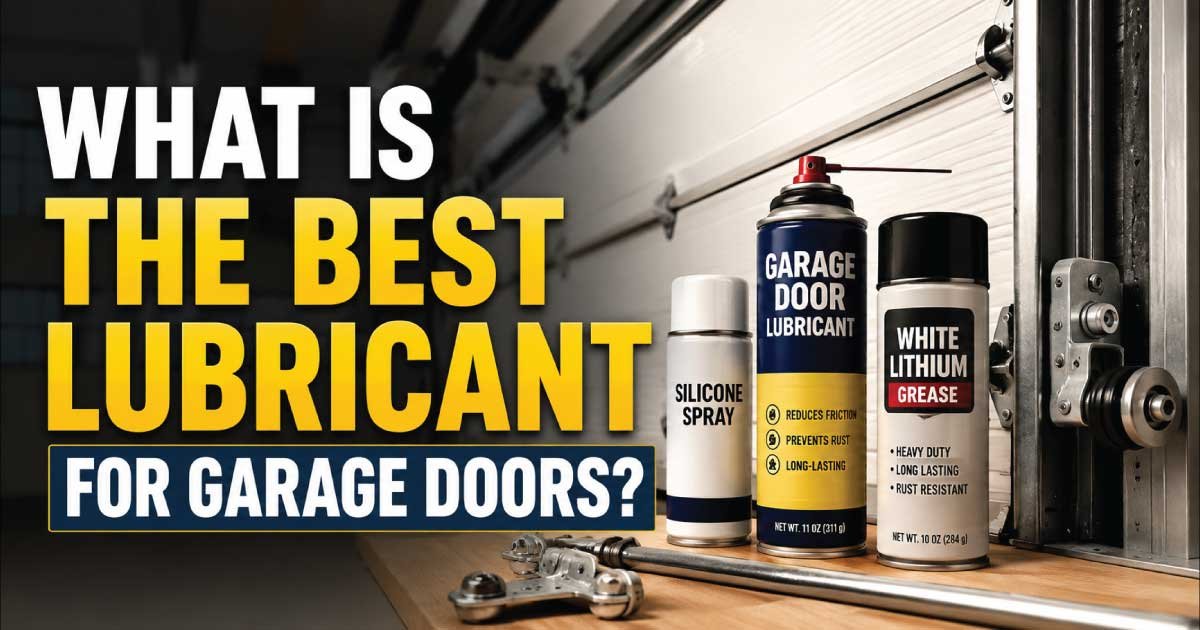
A noisy, jerky, or slow-moving garage door is often a sign that it needs proper lubrication rather than an expensive repair. Many homeowners assume any household oil or grease will solve the problem, but using the wrong product can attract dirt, damage components, or even shorten the life of the garage door system. Choosing the best lubricant for garage doors is about more than stopping squeaks—it’s also about reducing wear, preventing rust, and helping the entire system operate smoothly.
Garage doors include dozens of moving parts that work together every time the door opens or closes. Rollers, hinges, springs, bearings, and tracks all experience friction, and regular preventive maintenance helps minimize that friction before it causes costly damage. Whether your garage door is made of steel, aluminum, wood, or composite materials, using the correct lubricant can improve performance and extend the lifespan of important components.
In this repair guide, you’ll learn how garage door lubrication works, how to recognize lubrication-related problems, the most common reasons they occur, essential safety tips before starting maintenance, the tools you’ll need, and a step-by-step troubleshooting process to identify whether lubrication alone will solve the problem or if a larger repair is necessary.
Common Signs and Symptoms
Many garage door problems begin gradually. A door that once moved quietly may become noisy or hesitate during operation. Recognizing these warning signs early helps prevent excessive wear on expensive parts such as springs, rollers, bearings, and the garage door opener.
Common symptoms include:
- Squeaking or squealing while opening or closing
- Grinding or scraping noises
- Door moving unevenly
- Slow or jerky movement
- Vibrations during operation
- Metal-on-metal sounds
- Rollers sticking or hesitating
- Door requiring more force to move manually
- Garage door opener working harder than usual
- Visible rust on hinges, springs, or bearings
- Black dirt buildup around moving parts
- Increased vibration from the opener rail
These symptoms do not always mean parts need replacement. In many cases, dried lubricant, dirt buildup, or incorrect lubrication is the underlying cause. However, if lubrication does not improve operation, further diagnosis is necessary because worn rollers, damaged hinges, broken bearings, or spring problems may also be involved.
How the Appliance or System Normally Works
Understanding how a garage door operates makes it much easier to diagnose lubrication problems. Every moving component depends on controlled movement with minimal friction. When friction increases, every other component experiences additional stress.
A typical residential garage door operates through several connected parts:
- Torsion or extension springs counterbalance the door’s weight.
- Rollers travel inside the tracks as the door moves.
- Hinges allow individual door sections to bend smoothly.
- Bearings support rotating shafts.
- Pulleys and cables help lift the door on some systems.
- The opener provides mechanical force after the springs have balanced most of the door’s weight.
Contrary to what many homeowners believe, the tracks themselves usually should not be lubricated. Rollers are designed to roll along clean tracks, not slide through oily surfaces. Applying grease or oil to the tracks often causes dust, debris, and grit to accumulate, increasing friction instead of reducing it.
Instead, lubrication belongs on moving pivot points, bearings, hinges, springs (when recommended by the manufacturer), and roller bearings rather than the track surfaces.
When properly lubricated, the system operates quietly, evenly, and with minimal resistance. The opener experiences less strain, components last longer, and routine maintenance becomes much less expensive than replacing worn hardware.
Most Common Reasons This Problem Happens
Garage door lubrication issues usually develop over time rather than appearing suddenly. Understanding the root causes helps homeowners choose the correct solution instead of simply adding more lubricant.
Old Lubricant Has Dried Out
Garage door lubricant gradually loses its effectiveness after months of temperature changes and repeated use. Once it dries, friction increases significantly.
Why it happens
- Age
- Heat
- Cold weather
- Frequent door operation
Symptoms
- Squeaking
- Dry metal appearance
- Increased friction
How to identify it
Inspect hinges and rollers. Dry or flaky residue often indicates old lubricant that should be cleaned before applying fresh lubricant.
Wrong Lubricant Was Used
One of the most common DIY mistakes is using products such as WD-40 Original Formula, motor oil, cooking oil, or heavy axle grease.
Why it happens
Many homeowners assume every oil works the same.
Symptoms
- Sticky residue
- Dirt accumulation
- Continued noise
- Black grime
How to identify it
If moving parts feel thick, sticky, or covered with dust, an unsuitable lubricant is likely responsible.
Modern garage doors generally perform best with:
- Silicone spray lubricant
- White lithium grease (where appropriate)
- Garage door lubricants specifically designed for residential door systems
Dirt and Debris Contamination
Dust, pollen, road salt, and garage debris gradually mix with lubricant.
Why it happens
Garages are exposed to outdoor contaminants every day.
Symptoms
- Grinding sounds
- Slow rollers
- Rough movement
How to identify it
Inspect rollers and hinges for thick black buildup or hardened deposits.
Rust Formation
Moisture is a common problem in humid climates and unheated garages.
Why it happens
Condensation causes exposed steel components to corrode.
Symptoms
- Rust-colored residue
- Squeaking
- Stiff hinges
How to identify it
Look closely at springs, hinges, bearings, and roller shafts.
Minor surface rust can often be managed during maintenance, while severe corrosion usually requires replacement.
Worn Rollers or Bearings
Sometimes lubrication is blamed for problems actually caused by worn mechanical parts.
Why it happens
Rollers eventually wear after thousands of operating cycles.
Symptoms
- Loud clicking
- Wobbling rollers
- Door vibration
How to identify it
Rotate each roller by hand with the door disconnected from the opener. Rough movement or excessive side-to-side play indicates wear rather than insufficient lubrication.
Lack of Preventive Maintenance
Many garage doors receive little or no maintenance for years.
Why it happens
Garage doors often continue working despite increasing wear, so maintenance gets postponed.
Symptoms
- Progressive increase in noise
- Uneven operation
- Multiple dry components
How to identify it
If the door has not been lubricated within the past six to twelve months, overdue maintenance is a likely contributor.
Safety Precautions Before Troubleshooting
Although lubricating a garage door is considered a beginner-friendly DIY repair, safety should always come first. Garage doors are heavy, and several components operate under extreme spring tension. Understanding what is safe to inspect and what should be left to professionals helps prevent serious injuries.
Before beginning any inspection or maintenance:
- Disconnect the automatic opener using the emergency release cord.
- Keep the garage door fully closed whenever possible.
- Never loosen torsion spring hardware.
- Do not adjust spring tension.
- Wear safety glasses to protect against dust and debris.
- Wear work gloves when handling metal components.
- Use a stable step ladder on level ground.
- Keep children and pets away from the work area.
- Avoid spraying lubricant near electrical connections.
- Wipe excess lubricant immediately to prevent slipping hazards.
- Follow the lubricant manufacturer’s instructions.
If you discover broken springs, damaged lift cables, bent tracks, or severely worn hardware during your inspection, stop troubleshooting and arrange for a professional repair. These components store significant mechanical energy and can be dangerous to repair without specialized training.
Tools Required
Having the correct tools makes garage door maintenance faster, safer, and more effective. Most homeowners already own many of these items.
| Tool | Purpose |
|---|---|
| Silicone garage door lubricant | Lubricates rollers, hinges, and moving parts |
| White lithium grease | Suitable for selected metal components when recommended |
| Clean microfiber cloth | Removes dirt and excess lubricant |
| Soft brush | Cleans debris from hardware |
| Step ladder | Reaches upper hinges and rollers safely |
| Safety glasses | Protects eyes from debris and spray |
| Work gloves | Protects hands during inspection |
| Socket or wrench set | Tightens accessible loose hardware if needed |
| Flashlight | Inspects hidden moving parts |
| Mild household cleaner | Cleans surfaces before lubrication |
Step-by-Step Troubleshooting Guide
Before applying lubricant everywhere, inspect the garage door systematically. This process helps determine whether lubrication will solve the problem or whether worn parts require replacement.
Step 1: Listen During Operation
Open and close the garage door while standing at a safe distance.
Why it matters
Different noises often point to different components.
Expected result
You should identify whether the sound comes from rollers, hinges, springs, or the opener.
What to do next
Move closer to inspect the suspected area with the door closed.
Step 2: Inspect All Moving Parts
Examine rollers, hinges, bearings, springs, brackets, and the opener rail.
Why it matters
Visible wear often explains unusual noises.
Expected result
You may find rust, dirt buildup, cracked rollers, or loose hardware.
What to do next
Clean dirty areas before deciding whether lubrication is appropriate.
Step 3: Check Existing Lubricant
Look for dried residue or excessive grease.
Why it matters
Old lubricant often causes more problems than no lubricant.
Expected result
Moving parts should appear lightly coated rather than sticky.
What to do next
Remove contaminated lubricant before applying fresh product.
Step 4: Inspect the Rollers
Rotate each accessible roller by hand.
Why it matters
Healthy rollers rotate smoothly with minimal resistance.
Expected result
Rollers should spin quietly without wobbling.
What to do next
Replace damaged rollers instead of relying on additional lubricant.
Step 5: Examine Hinges and Pivot Points
Check each hinge for stiffness or corrosion.
Why it matters
Dry hinges commonly create squeaking sounds.
Expected result
Hinges should pivot freely.
What to do next
Apply garage door lubricant only to the hinge pivot points.
Step 6: Inspect the Tracks
Check for dents, dirt, or obstructions.
Why it matters
Track problems can resemble lubrication issues.
Expected result
Tracks should be clean and free of damage.
What to do next
Clean the tracks with a cloth but avoid coating them with lubricant unless the manufacturer specifically recommends it.
Step 7: Test Door Movement
Disconnect the opener and raise the door manually.
Why it matters
Manual movement helps separate opener problems from mechanical issues.
Expected result
The door should move smoothly and remain reasonably balanced.
What to do next
If movement remains rough after proper lubrication, further mechanical diagnosis or professional inspection may be necessary.
Quick Diagnosis Table
The following table provides a quick reference for matching common symptoms with likely causes and the next recommended action.
| Symptom | Possible Cause | Recommended Solution |
|---|---|---|
| Squeaking hinges | Dry pivot points | Clean and apply garage door lubricant |
| Grinding noise | Dirt buildup or worn rollers | Clean components and inspect rollers |
| Sticky movement | Incorrect lubricant | Remove residue and use silicone or garage door lubricant |
| Rusty hardware | Moisture exposure | Remove light rust and lubricate or replace damaged parts |
| Door shakes while moving | Worn rollers or loose hardware | Inspect rollers and tighten accessible fasteners |
| Loud opener | Increased friction | Lubricate moving components and inspect door balance |
| Black greasy residue | Heavy grease attracting dirt | Clean thoroughly and re-lubricate correctly |
| Jerky manual operation | Mechanical wear or poor lubrication | Inspect bearings, rollers, and hinges before further repair |
How to Fix Each Common Cause
Now that you’ve identified the likely cause of your garage door problem, it’s time to make the appropriate repair. In many cases, proper lubrication and routine maintenance are enough to restore smooth, quiet operation. However, knowing when to clean, lubricate, repair, or replace a component is just as important as choosing the right product.
Fixing Dried or Worn-Out Lubricant
Old lubricant should always be removed before applying a fresh product. Simply spraying more lubricant over dirt and dried residue usually creates a sticky layer that attracts even more dust.
Steps:
- Close the garage door and disconnect the opener.
- Wipe old lubricant from hinges, roller bearings, springs (if recommended by the manufacturer), and bearing plates using a clean cloth.
- Remove stubborn buildup with a soft brush.
- Apply a light coat of garage door silicone lubricant or a garage door-specific spray lubricant.
- Open and close the door several times to distribute the lubricant evenly.
- Wipe away any excess.
Avoid over-lubricating. A thin coating reduces friction without attracting unnecessary dirt.
Replacing the Wrong Lubricant
If someone previously used motor oil, cooking oil, penetrating oil as a long-term lubricant, or thick grease, cleaning the affected parts is the first priority.
A good cleaning restores proper movement and prevents contaminants from continuing to build up.
Recommended approach:
- Remove sticky residue with a clean cloth.
- Use a mild cleaner if necessary.
- Dry all components thoroughly.
- Apply only a lubricant intended for garage doors.
For most residential garage doors:
- Silicone spray works well on rollers, hinges, and metal moving parts.
- White lithium grease is suitable for certain metal contact points where recommended by the manufacturer.
Always check your garage door manufacturer’s maintenance instructions, as some nylon rollers with sealed bearings require little or no lubrication.
Cleaning Dirt and Debris
A dirty garage door system creates unnecessary friction.
Focus on cleaning:
- Hinges
- Roller stems
- Bearing plates
- Spring surfaces
- Track interiors
Although tracks should remain clean, they generally should not be lubricated. Instead:
- Wipe away dust.
- Remove cobwebs and debris.
- Check for dents or obstructions.
- Ensure rollers move freely inside the clean track.
If the tracks are badly bent or misaligned, lubrication will not solve the issue.
Treating Light Surface Rust
Minor rust does not automatically require replacement.
If corrosion is only superficial:
- Remove loose rust with a soft brush.
- Wipe the area clean.
- Apply the proper lubricant to help reduce future corrosion.
- Continue monitoring during routine maintenance.
Replace components if you notice:
- Deep pitting
- Cracks
- Flaking metal
- Excessive corrosion around load-bearing parts
Springs, cables, and brackets weakened by rust should not be repaired by inexperienced homeowners.
Replacing Worn Rollers
Rollers eventually wear out regardless of lubrication.
Signs replacement is needed include:
- Flat spots
- Cracked nylon
- Loose bearings
- Excessive wobble
- Rough rotation
High-quality nylon rollers with sealed bearings usually operate more quietly than older steel rollers and require less maintenance.
If only the bottom rollers are damaged, avoid removing them yourself on torsion spring systems because the bottom brackets are attached to high-tension lift cables.
Tightening Loose Hardware
Garage doors vibrate thousands of times throughout their service life.
Inspect:
- Hinge bolts
- Roller brackets
- Track mounting bolts
- Opener mounting hardware
Tighten loose fasteners carefully without overtightening.
If holes have become enlarged or brackets are cracked, replacement is usually the better solution.
Advanced Troubleshooting
If lubrication does not eliminate the problem, a more detailed diagnosis is necessary. Less common mechanical issues can produce symptoms that resemble poor lubrication, making careful inspection essential before replacing parts unnecessarily.
Door Is Still Noisy After Lubrication
Possible causes include:
- Worn bearings
- Damaged hinges
- Loose opener chain or belt
- Cracked rollers
- Bent tracks
- Failing opener motor
Listen carefully to identify whether the noise comes from the door itself or the opener.
Garage Door Opens Unevenly
An uneven door often indicates a mechanical balance problem rather than a lubrication issue.
Possible causes:
- Broken extension spring
- Weak torsion spring
- Cable stretching
- Damaged pulley
- Bent track
These repairs often involve high spring tension and are best left to trained technicians.
Door Feels Extremely Heavy
A properly balanced garage door should feel relatively light when disconnected from the opener.
A heavy door may indicate:
- Broken torsion spring
- Broken extension spring
- Cable failure
- Spring fatigue
Do not continue operating the opener if the door feels unusually heavy. The opener is not designed to lift the full weight of the door and may suffer premature failure.
Rollers Keep Coming Off the Track
Possible causes include:
- Bent track
- Loose track brackets
- Broken rollers
- Severe door misalignment
This problem requires more than lubrication and should be corrected before further operation to prevent additional damage.
When Repair Is Not Worth It
Most lubrication-related issues are inexpensive to resolve. However, there comes a point when replacing worn components—or even the entire garage door—makes more sense than repeated repairs.
Replacement is often the smarter choice when:
- Multiple rollers have failed.
- Springs are near the end of their service life.
- Tracks are severely bent.
- Panels are badly damaged.
- The opener repeatedly struggles despite proper maintenance.
- Replacement parts are no longer readily available.
- The garage door is more than 20–30 years old and requires frequent repairs.
If several major components need replacement at the same time, investing in a newer garage door system may provide better long-term value, improved safety features, quieter operation, and lower maintenance requirements.
Preventive Maintenance Tips
Preventive maintenance is the easiest way to avoid noisy operation, premature wear, and expensive repairs. A few minutes of inspection every several months can significantly extend the lifespan of your garage door system.
Follow these maintenance practices:
- Lubricate moving parts every 6–12 months, or more often in harsh climates.
- Clean tracks regularly instead of lubricating them.
- Inspect rollers for wear.
- Check hinges for looseness.
- Tighten accessible hardware annually.
- Remove dirt before applying fresh lubricant.
- Watch for rust development.
- Test manual door balance periodically.
- Listen for new noises during operation.
- Replace worn rollers before they damage tracks.
- Keep the opener rail maintained according to the manufacturer’s instructions.
- Schedule a professional inspection every few years if the door receives heavy daily use.
Routine preventive maintenance reduces friction, improves safety, and helps avoid unexpected breakdowns.
Common Mistakes to Avoid
Many garage door problems become worse because of well-intentioned DIY mistakes. Avoiding these errors will help protect both the door and the opener.
Common mistakes include:
- Using WD-40 Original Formula as the primary lubricant instead of a garage door lubricant.
- Applying grease to the tracks.
- Spraying excessive amounts of lubricant.
- Ignoring worn rollers while repeatedly adding more lubricant.
- Lubricating dirty components without cleaning them first.
- Attempting to repair torsion springs.
- Continuing to operate a door with broken springs.
- Neglecting annual maintenance.
- Using household oils that attract dust.
- Failing to inspect the entire system during maintenance.
The goal is to reduce friction—not to coat every component with oil.
When to Call a Professional
Many lubrication tasks are suitable for homeowners, but some repairs involve significant safety risks. Knowing when to stop can prevent serious injuries and additional damage.
Contact a qualified garage door technician if you notice:
- Broken torsion springs
- Broken extension springs
- Frayed or broken lift cables
- Bent tracks requiring realignment
- Door panels separating
- Door falling rapidly when disconnected
- Opener repeatedly reversing without obstruction
- Severe structural rust
- Roller replacement involving bottom brackets
- Electrical issues with the opener
Professional technicians have specialized tools for safely handling high-tension springs and properly balancing the entire door system.
Estimated Repair Costs
The costs below are approximate and may vary depending on your location, garage door type, and labor rates.
| Repair | Estimated Cost | DIY or Professional |
|---|---|---|
| Garage door lubrication | $10–$30 | DIY |
| Cleaning and preventive maintenance | $10–$40 | DIY |
| Replace standard rollers | $75–$200 | DIY or Professional |
| Replace premium nylon rollers | $150–$350 | DIY or Professional |
| Replace hinges | $20–$120 | DIY |
| Track adjustment | $125–$300 | Professional |
| Replace lift cables | $150–$300 | Professional |
| Torsion spring replacement | $200–$450 | Professional |
| Garage door opener repair | $150–$400 | Professional |
| New garage door installation | $900–$2,500+ | Professional |
Frequently Asked Questions
1. What is the best lubricant for garage doors?
The best lubricant for garage doors is a silicone-based garage door spray or a garage door-specific lubricant designed for moving metal components. These products reduce friction, resist moisture, and attract less dirt than household oils. White lithium grease is also suitable for certain metal parts when recommended by the manufacturer.
2. Can I use WD-40 on my garage door?
WD-40 Original Formula is primarily a cleaner and water-displacing product rather than a long-term lubricant. It can help loosen stuck parts or remove residue, but it should generally be followed by a proper garage door lubricant to provide lasting protection and smooth operation.
3. Should I lubricate the garage door tracks?
No, garage door tracks should usually remain clean and dry. Lubricating the tracks can attract dust, grit, and debris, causing rollers to operate less efficiently. Instead, clean the tracks regularly and lubricate the rollers, hinges, bearings, and other moving components.
4. How often should I lubricate my garage door?
Most residential garage doors benefit from lubrication every six to twelve months. Doors exposed to heavy daily use, coastal environments, or extreme temperatures may require more frequent maintenance to keep moving parts protected from wear and corrosion.
5. What parts of a garage door need lubrication?
Lubricate hinges, roller bearings, torsion springs (if approved by the manufacturer), bearing plates, and pivot points. Avoid applying lubricant to the tracks or nylon roller wheels unless the manufacturer specifically recommends doing so.
6. Why is my garage door still noisy after lubrication?
If proper lubrication does not reduce the noise, worn rollers, damaged bearings, loose hardware, bent tracks, or opener problems may be responsible. Inspect each component carefully to identify mechanical wear before assuming additional lubricant will solve the issue.
7. Can too much lubricant damage a garage door?
Yes, excessive lubricant can attract dirt and create sticky deposits that increase friction over time. Applying a thin, even coating is more effective than soaking the components. Always wipe away excess lubricant after cycling the door several times.
8. Is garage door lubrication a DIY repair?
Yes, routine lubrication is one of the easiest garage door maintenance tasks for homeowners. However, repairs involving springs, lift cables, bottom brackets, or major alignment problems should be handled by trained professionals because these components can be dangerous.
9. Does lubricating the garage door help the opener last longer?
Yes, reducing friction throughout the garage door system decreases the workload on the opener. A properly maintained door moves more smoothly, allowing the opener to operate under less strain and potentially extending its service life.
Final Thoughts
Choosing the best lubricant for garage doors is one of the simplest yet most effective ways to improve performance, reduce noise, and extend the life of your entire garage door system. The right lubricant minimizes friction, protects against rust, and helps rollers, hinges, bearings, and springs move smoothly without attracting excessive dirt.
Successful garage door maintenance goes beyond simply spraying lubricant on noisy parts. A thorough inspection, proper cleaning, and careful diagnosis help determine whether the issue is caused by dried lubricant, worn hardware, contamination, or a more serious mechanical failure. By following a regular preventive maintenance schedule and using products designed specifically for garage doors, most homeowners can avoid many common problems before they become expensive repairs.
Finally, remember that while routine lubrication is an excellent DIY project, repairs involving high-tension springs, lift cables, or structural damage should always be left to qualified professionals. Safe maintenance, timely inspections, and the correct lubricant will keep your garage door operating quietly, reliably, and efficiently for years to come.

Engineer Ali Hasan is a garage door expert and the founder of FixFasty. With over 16 years of experience in mechanical systems and home maintenance, he provides practical, step-by-step guides on garage door installation, repairs, and maintenance, helping homeowners keep their garage doors safe, reliable, and long-lasting.