
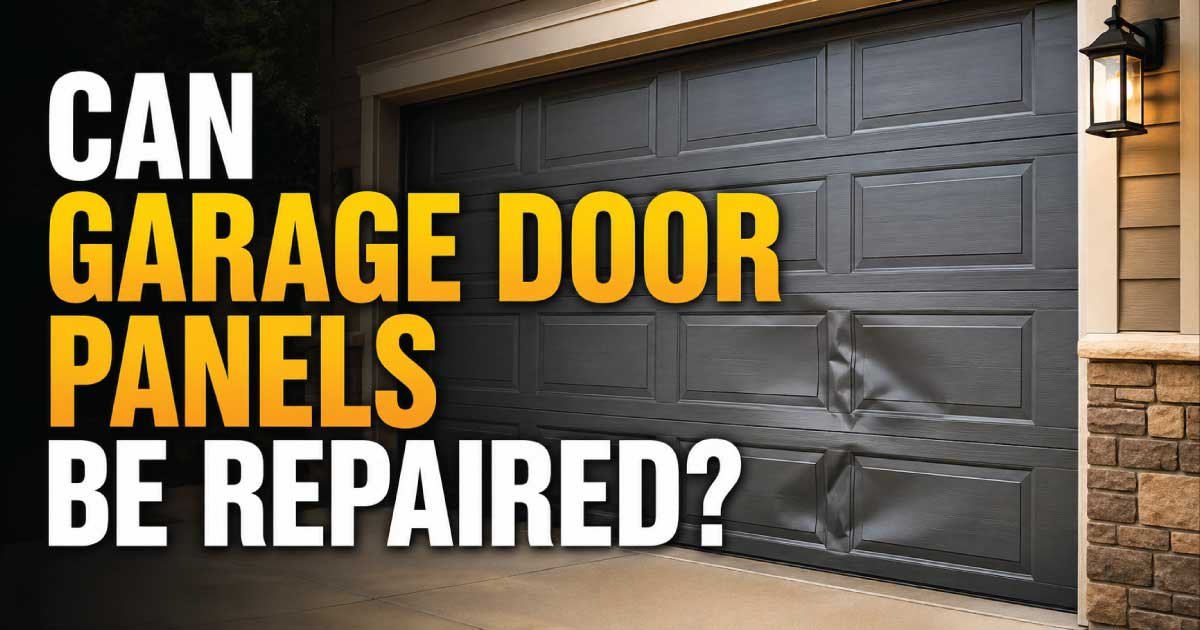
A damaged garage door panel is one of the most common problems homeowners face. Whether the damage comes from backing a car into the door, severe weather, accidental impact, or years of daily use, it’s natural to wonder: can garage door panels be repaired, or do they need to be replaced? The answer depends on the type of damage, the door material, and whether the problem affects the door’s structural strength or safe operation.
Ignoring damaged panels can lead to bigger issues. A bent or cracked panel may place extra stress on the garage door opener, tracks, rollers, and springs. Over time, what begins as a cosmetic issue can turn into an expensive repair or even create a safety hazard if the door becomes unbalanced.
This repair guide explains how garage door panels normally function, the warning signs that indicate damage, the most common causes of panel problems, and how to safely troubleshoot them before deciding between DIY repair and professional repair. By the end of this guide, you’ll know how to inspect your garage door with confidence and determine the most practical next step.
Common Signs and Symptoms
Garage door panel damage doesn’t always look serious at first. In many cases, homeowners notice small changes in how the door operates before realizing a panel has been compromised. Understanding these warning signs helps you diagnose the issue early and avoid unnecessary damage to other components.
Common symptoms include:
- Visible dents after a vehicle or object hits the door
- Cracked or split wooden panels
- Bent metal sections
- Warped panels that no longer sit evenly
- Gaps between door sections when closed
- The garage door shakes while opening or closing
- Unusual grinding, scraping, or popping noises
- The opener struggles to lift the door
- Rollers repeatedly come out of alignment
- Water leaks through damaged sections
- Increased drafts or poor insulation
- Peeling paint caused by moisture entering damaged panels
For example, a homeowner may notice only a small dent after accidentally bumping the garage door with a car. Weeks later, the door begins making unusual noises because the bent panel is no longer moving smoothly through the tracks. Catching the problem early often prevents additional repairs.
Not every damaged panel requires complete replacement. Cosmetic dents may be repairable, while cracked or severely bent panels often require more extensive work.
How the Garage Door Normally Works
Before troubleshooting damaged panels, it helps to understand how the entire garage door system operates. Garage door panels are not standalone pieces—they work together as a flexible structure that distributes weight evenly while moving along the tracks.
A typical sectional garage door consists of several horizontal panels connected by hinges. As the opener lifts the door, rollers travel inside vertical and horizontal tracks, allowing the panels to bend smoothly around the curved track.
Other important components include:
- Garage door opener
- Torsion or extension springs
- Lift cables
- Rollers
- Hinges
- Tracks
- Weather seals
Each panel supports part of the door’s overall strength. If one panel becomes bent or weakened, it can affect the alignment of the entire system.
Here’s a simple overview of normal operation:
- The opener begins lifting the door.
- Springs carry most of the door’s weight.
- Rollers move smoothly inside the tracks.
- Hinges allow panels to bend as the door curves overhead.
- The panels remain aligned and evenly spaced throughout the movement.
When a panel becomes damaged, this smooth motion can be interrupted. The opener may work harder, rollers may bind inside the tracks, and hinges may experience additional stress.
Understanding this relationship makes troubleshooting much easier because the visible damage isn’t always the only problem.
Most Common Reasons This Problem Happens
Garage door panels experience constant movement and regular exposure to weather, making them vulnerable to several different types of damage. Identifying the actual cause is essential before deciding whether a panel can be repaired or replaced.
Vehicle Impact
The most common cause of panel damage is accidentally hitting the garage door with a vehicle.
Why it happens:
Drivers may misjudge stopping distance or accidentally press the accelerator instead of the brake.
Symptoms:
- Large dents
- Bent panel edges
- Misaligned sections
- Difficulty opening the door
How to identify it:
Inspect the panel from multiple angles. Impact damage usually creates visible distortion and may shift nearby hinges or rollers.
Severe Weather
Strong winds, hail, heavy rain, and falling tree branches can damage garage door panels.
Why it happens:
Weather places repeated stress on door materials, especially older doors with weakened panels.
Symptoms:
- Cracks
- Surface dents
- Water intrusion
- Warping
How to identify it:
Look for moisture damage, paint bubbling, rust, or visible cracks after storms.
Rust and Corrosion
Steel garage doors can develop rust over time if protective coatings wear away.
Why it happens:
Moisture, road salt, and humidity gradually corrode exposed metal.
Symptoms:
- Rust spots
- Flaking paint
- Thin metal
- Small holes
How to identify it:
Inspect the lower panels carefully since they collect the most moisture.
Wood Rot
Wooden garage doors require regular maintenance.
Why it happens:
Moisture enters unsealed wood and slowly causes decay.
Symptoms:
- Soft wood
- Cracks
- Peeling paint
- Swelling
How to identify it:
Press gently with a screwdriver. Rotten wood feels soft rather than solid.
Everyday Wear
Years of opening and closing eventually weaken panels.
Why it happens:
Constant movement causes joints and hinges to loosen while materials naturally age.
Symptoms:
- Small cracks
- Slight bending
- Loose fasteners
- Uneven movement
How to identify it:
Compare all panels. One section may appear less rigid or slightly twisted.
Improper Installation
Incorrect installation places uneven stress on certain panels.
Why it happens:
Tracks may not be level, hinges may be improperly positioned, or incorrect hardware may have been used.
Symptoms:
- Uneven gaps
- Repeated binding
- Panels rubbing together
How to identify it:
Watch the door operate slowly and look for sections that hesitate or flex more than others.
Failed Supporting Hardware
Sometimes the panel itself isn’t the primary problem.
Why it happens:
Loose hinges, damaged rollers, or worn brackets allow extra movement that eventually damages panels.
Symptoms:
- Panel movement
- Loud popping noises
- Sagging sections
How to identify it:
Inspect all hardware before assuming the panel itself has failed.
Also Read:
Safety Precautions Before Troubleshooting
Garage doors are much heavier than they appear. Even if you’re only inspecting damaged panels, it’s important to work safely because several components remain under high tension.
Before beginning any inspection:
- Disconnect the automatic opener using the emergency release cord.
- Keep the door fully closed whenever possible.
- Wear safety glasses to protect against flying debris.
- Use durable work gloves to avoid cuts from sharp metal edges.
- Never loosen or remove torsion springs.
- Never disconnect lift cables attached to spring systems.
- Keep children and pets away from the work area.
- Use a stable ladder if inspecting upper panels.
- Avoid working during strong winds if the garage door is partially damaged.
- Have another adult nearby when inspecting larger doors.
If you notice broken springs, hanging cables, or a door that appears ready to fall, stop troubleshooting immediately. These repairs involve stored spring tension that can cause serious injury.
A safe inspection focuses on identifying visible damage without disassembling high-tension components.
Tools Required
Before inspecting your garage door, gather a few basic tools. Most homeowners already own many of these items.
| Tool | Purpose |
|---|---|
| Flashlight | Inspect cracks, rust, and hidden damage |
| Work gloves | Protect hands from sharp edges |
| Safety glasses | Protect eyes during inspection |
| Tape measure | Measure dents, gaps, and panel alignment |
| Level | Check door alignment |
| Screwdriver set | Inspect or tighten loose hardware |
| Socket wrench | Check accessible bolts and brackets |
| Rubber mallet | Lightly test minor alignment issues without damaging surfaces |
| Step ladder | Reach upper panels safely |
| Camera or smartphone | Record damage for comparison or insurance purposes |
Step-by-Step Troubleshooting Guide
A systematic inspection helps determine whether the garage door panel itself is damaged or if another component is causing the problem. Work through each step in order instead of jumping directly to repairs.
Step 1: Inspect the Panel Visually
Look closely at every panel from both inside and outside the garage.
Why it matters:
Visible dents, cracks, or warping often reveal the source of the problem immediately.
Expected result:
You identify whether the damage is cosmetic or structural.
What to do next:
If only paint or surface scratches are present, continue inspecting before assuming replacement is necessary.
Step 2: Check Panel Alignment
Close the garage door completely and examine the spacing between sections.
Why it matters:
Uneven gaps may indicate a bent panel or damaged hinges.
Expected result:
Panels should sit evenly across the entire door.
What to do next:
If gaps vary significantly, inspect nearby hardware.
Step 3: Inspect Hinges
Examine every hinge connecting the damaged panel.
Why it matters:
Loose hinges often create movement that looks like panel failure.
Expected result:
Hinges remain tight with no cracks.
What to do next:
Tighten accessible fasteners if loose, but replace cracked hinges later if needed.
Step 4: Check Rollers and Tracks
Open the door slowly by hand if it moves safely.
Why it matters:
Damaged panels sometimes force rollers out of alignment.
Expected result:
Rollers should move smoothly without binding.
What to do next:
If rollers catch repeatedly, inspect the affected panel more carefully.
Step 5: Test Door Balance
Disconnect the opener and manually raise the door halfway.
Why it matters:
An unbalanced door may indicate problems beyond the panel.
Expected result:
The door should remain nearly stationary.
What to do next:
If the door quickly falls or rises, avoid further testing and arrange for professional spring inspection.
Step 6: Look for Water Damage
Inspect both sides of the affected panel.
Why it matters:
Moisture can weaken wood, insulation, and internal reinforcement.
Expected result:
Panels should remain dry and structurally solid.
What to do next:
If rot or internal swelling is present, replacement may be more practical than repair.
Step 7: Evaluate Overall Door Operation
Reconnect the opener only if the inspection revealed no serious safety concerns.
Why it matters:
Smooth movement confirms the damage is likely limited.
Expected result:
The door should operate quietly without excessive vibration.
What to do next:
If the opener strains or the door jerks during movement, further diagnosis or professional evaluation is recommended before attempting repairs.
Also Read:
Quick Diagnosis Table
The symptoms below provide a quick starting point for identifying the likely cause of garage door panel problems before deciding on the appropriate repair.
| Symptom | Possible Cause | Recommended Solution |
|---|---|---|
| Small dent | Minor vehicle impact | Assess for cosmetic repair options |
| Large bent panel | Heavy impact | Inspect structural damage and consider panel replacement |
| Cracked wood | Moisture or impact | Evaluate whether repair is practical or replacement is needed |
| Rust holes | Corrosion | Remove rust if minor; replace severely weakened panels |
| Door shakes while moving | Bent panel or loose hardware | Inspect hinges, rollers, and panel alignment |
| Uneven gaps between panels | Warped panel or hinge issue | Check alignment and supporting hardware |
| Water leaking into garage | Cracked panel or failed seal | Repair the damaged area and inspect weather stripping |
| Opener struggles to lift door | Panel damage affecting balance or movement | Inspect the entire door system before further operation |

Engineer Ali Usman is a professional garage door expert and author at FixFasty, with over 10 years of hands-on experience in garage door systems and mechanical maintenance. He writes clear, step-by-step guides on garage door repairs, parts, and safety practices, helping homeowners fix problems correctly and maintain smooth, secure, and long-lasting garage door performance.