
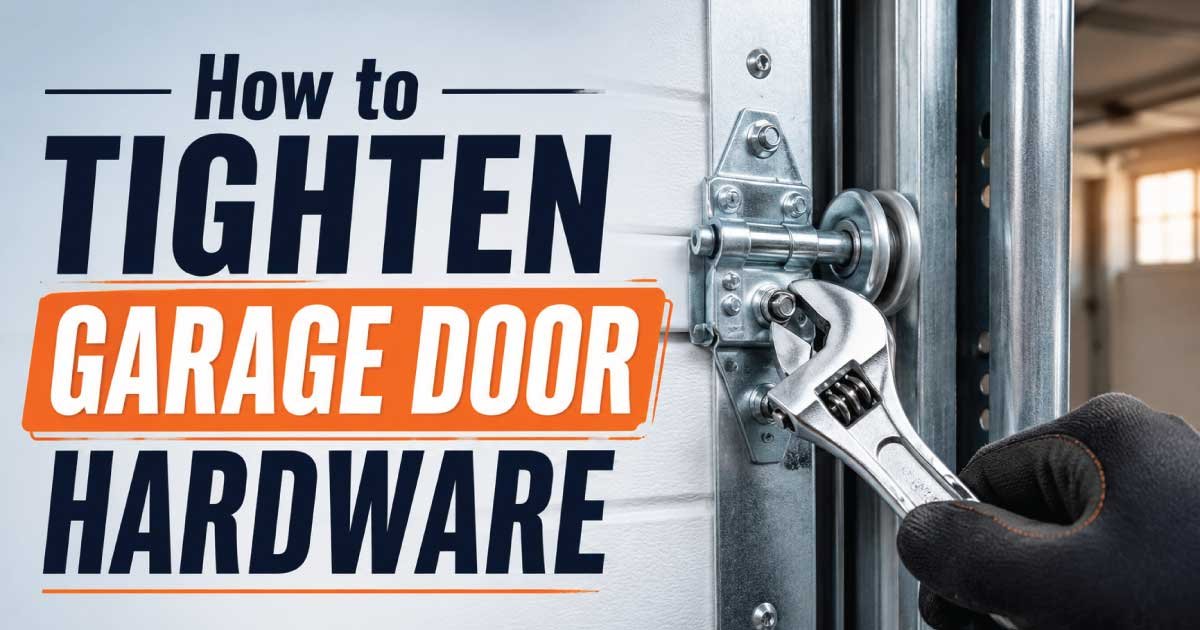
How to Tighten Garage Door Hardware

A loose garage door can become noisy, unreliable, and unsafe if the problem is ignored. Learning how to tighten garage door hardware is one of the simplest maintenance tasks a homeowner can perform to improve door operation and prevent larger repairs. Over time, vibration from daily opening and closing can loosen nuts, bolts, hinges, rollers, and other hardware that keeps the garage door system aligned.

Many homeowners first notice rattling sounds, shaking movement, uneven travel, or a door that feels heavier than usual. These warning signs often indicate that the hardware needs inspection and adjustment before damaged parts develop. A loose bracket or hinge can place extra stress on the opener, tracks, and door panels, leading to more expensive repairs.

This guide explains how garage door hardware works, why it becomes loose, what signs to watch for, and how to safely inspect the system. You will learn the tools needed, troubleshooting methods, and practical repair steps that can help restore smoother and quieter operation. While many tightening tasks are suitable for DIY repair, some garage door components require professional attention because of stored tension and safety risks.


Common Signs and Symptoms

A garage door usually gives several clues when its hardware starts loosening. Recognizing these symptoms early allows homeowners to correct minor issues before they affect the entire system. A loose connection may not stop the door from working immediately, but continued operation can increase wear on other components.

Common signs that garage door hardware needs tightening include:

  • Excessive rattling or vibration: Loose nuts, bolts, and brackets can create metal-on-metal movement when the door opens or closes.
  • A noisy garage door: Clicking, clanking, squeaking, or banging sounds may indicate loose hinges, rollers, or track supports.
  • Visible movement in hardware: Hinges, brackets, or track sections should remain firmly attached. Any noticeable shifting requires inspection.
  • Uneven door movement: A loose hinge or roller bracket can cause one side of the door to move differently from the other.
  • The door shaking during operation: Excessive shaking often points to loose fasteners or misaligned components.
  • Slow or strained garage door opener operation: A door that drags or binds may force the opener to work harder than normal.
  • Gaps around hinges or brackets: Spaces between hardware and the door panel indicate that fasteners may have backed out.
  • Repeated need for adjustments: If the same bolts keep becoming loose, there may be worn parts, incorrect installation, or vibration issues.

For example, a homeowner may notice that the garage door sounds louder after several years of use. During inspection, they may find that the hinge screws have loosened slightly and allow the door sections to flex during movement. Tightening the hardware can often solve the noise problem before the hinges become damaged.


How the Garage Door System Normally Works

Understanding normal garage door operation makes troubleshooting much easier. A garage door is a connected system of panels, hinges, rollers, tracks, springs, cables, brackets, and an opener. Each component works together to move the heavy door safely and smoothly.

The door panels are connected with hinges that allow the sections to bend as the door travels along the curved track. Rollers attached to the sides of the door move inside the tracks, guiding the door upward and downward. Brackets hold important components in position, while bolts and screws keep the entire assembly secure.

During normal operation:

  1. The opener activates and pulls or pushes the door.
  2. Springs help balance the door’s weight so the opener does not carry the entire load.
  3. Rollers move through the tracks with minimal resistance.
  4. Hinges allow each door section to flex as it changes position.
  5. Hardware connections keep all parts aligned.

When hardware becomes loose, alignment changes. A loose hinge may allow a panel to shift. A loose track bracket may move the track slightly out of position. Even small changes can create noise, friction, and additional stress on the garage door system.


Most Common Reasons This Problem Happens

Garage door hardware rarely loosens without a reason. Most problems develop gradually because of regular use, environmental conditions, or worn components. Identifying the cause helps prevent the issue from returning after tightening.

Daily Vibration and Normal Use

The most common reason garage door hardware becomes loose is repeated vibration from everyday operation. A typical garage door may open and close hundreds or thousands of times each year. This constant movement slowly reduces the tightness of nuts, bolts, and screws.

Symptoms:

  • Rattling noises during operation
  • Loose nuts or bolts visible during inspection
  • Increased door vibration

How to identify it:

Inspect the hinge screws, roller brackets, track supports, and mounting hardware. If fasteners turn easily with a wrench or screwdriver, vibration may have loosened them.

What to do:

Tighten loose hardware carefully and inspect nearby components for damage. Do not overtighten screws into thin metal panels because this can strip holes or damage the door.

Temperature Changes and Weather Exposure

Garage doors are exposed to heat, cold, moisture, and seasonal changes. Metal components can expand and contract as temperatures change, which may gradually affect hardware connections.

Symptoms:

  • Hardware becomes loose after seasonal changes
  • Rust around bolts or brackets
  • Increased noise during temperature extremes

How to identify it:

Look for corrosion, worn fasteners, or movement around exterior brackets and tracks.

What to do:

Clean minor rust from hardware and replace badly corroded fasteners. Weather exposure may require more frequent maintenance in areas with high humidity or extreme temperatures.

Worn or Damaged Hardware

Sometimes hardware becomes loose because the component itself is failing. A damaged hinge, cracked bracket, or stretched mounting hole may prevent fasteners from staying tight.

Symptoms:

  • Bolts loosen again shortly after tightening
  • Visible cracks or bending
  • Door sections move excessively

How to identify it:

Check whether the fastener is tight but the part still moves. This usually indicates a worn component rather than a simple loose connection.

What to do:

Replace damaged parts instead of repeatedly tightening them. Temporary adjustments may hide a problem but will not restore safe operation.

Incorrect Installation or Previous Repairs

Garage door systems that were installed incorrectly may develop loose hardware sooner than expected. Using the wrong screws, improper fasteners, or incorrect bracket placement can create ongoing problems.

Symptoms:

  • Hardware repeatedly loosens
  • Door operation has always been noisy
  • Misaligned tracks or uneven movement

How to identify it:

Compare hardware placement on both sides of the door. Uneven installation or missing fasteners may indicate an earlier repair issue.

What to do:

Correct installation problems using manufacturer-approved hardware. For major alignment issues, professional repair is usually the safer choice.

Loose Track Supports or Mounting Brackets

The tracks guide the rollers and must remain firmly secured. Loose track supports can affect the entire door’s movement.

Symptoms:

  • Door shakes while opening
  • Rollers jump or scrape inside the track
  • Track appears to move

How to identify it:

Inspect the brackets connecting the tracks to the wall and ceiling structure.

What to do:

Tighten appropriate mounting hardware while keeping the track alignment unchanged. Moving the track position accidentally can create additional problems.

Safety Precautions Before Troubleshooting

Garage door repairs require caution because the system contains heavy moving parts and high-tension components. Before inspecting or tightening hardware, follow proper safety practices to prevent injury or equipment damage.

Safety steps before beginning:

  • Disconnect the garage door opener from power before working near moving parts.
  • Close the garage door completely before inspecting most hardware.
  • Keep children and pets away from the work area.
  • Wear safety glasses and gloves to protect against metal edges and debris.
  • Use a stable ladder when reaching upper brackets or tracks.
  • Never adjust or remove garage door springs unless you have professional training.
  • Do not loosen cable drums, lift cables, or spring components because they store dangerous amounts of energy.
  • Avoid placing hands near hinges, rollers, and moving sections while the door is operating.

The springs and cables are not the same as ordinary hardware. They balance the heavy weight of the door and can cause serious injuries if handled incorrectly. Tightening nuts and bolts is usually a safe DIY task, but spring adjustment and cable repairs should be left to a trained technician.


Tools Required

Having the correct tools makes garage door hardware inspection faster and reduces the risk of damaging components. Most basic tightening tasks require common household tools, but some repairs may need specialized equipment.

Tool Purpose
Socket wrench set Tightening nuts and bolts on hinges, brackets, and supports
Adjustable wrench Working with different fastener sizes
Screwdriver set Tightening hinge screws and smaller hardware
Pliers Holding or adjusting small components
Ladder Safely reaching upper hardware areas
Safety glasses Protecting eyes from dust and metal debris
Work gloves Protecting hands from sharp edges
Flashlight Inspecting dark areas, tracks, and brackets
Level Checking track alignment after inspection
Pen and notepad Recording loose or damaged components

Step-by-Step Troubleshooting Guide

A careful inspection helps determine whether loose hardware is the real cause of the problem. Follow these steps in order instead of randomly tightening parts, because unnecessary adjustments can create alignment problems.

  1. Disconnect the garage door opener and inspect the closed door

    What to inspect: Look at the entire garage door system, including hinges, brackets, rollers, tracks, and mounting points.

    Why it matters: A visual inspection helps identify obvious loose parts before tools are used.

    Expected result: Hardware should appear secure, with no visible movement or gaps.

    What to do next: Mark any loose, damaged, or suspicious areas for closer inspection.

  2. Check hinge screws and hinge plates

    What to inspect: Examine each hinge connecting the door sections.

    Why it matters: Hinges experience repeated movement and are among the most common areas to loosen.

    Expected result: Screws and bolts should be tight, and hinges should sit firmly against the door.

    What to do next: Tighten loose screws carefully. Replace damaged hinges if movement remains.

  3. Inspect roller brackets and track supports

    What to inspect: Check the brackets holding rollers and the hardware securing tracks.

    Why it matters: Loose brackets can cause noise, vibration, and uneven movement.

    Expected result: Tracks should remain stable, and brackets should not shift when lightly tested.

    What to do next: Tighten appropriate fasteners without changing track alignment.

  4. Test the door movement manually

    What to inspect: Lift the door slowly by hand after disconnecting the opener.

    Why it matters: Manual testing reveals whether loose hardware has affected balance or movement.

    Expected result: The door should move smoothly without excessive resistance.

    What to do next: If the door feels heavy or uneven, investigate spring or balance issues rather than only tightening hardware.

  5. Reconnect and test the garage door operation

    What to inspect: Observe the door during opening and closing.

    Why it matters: A final test confirms whether the repair improved performance.

    Expected result: The door should operate with reduced noise and less vibration.

    What to do next: If problems continue, move to deeper troubleshooting or consider professional diagnosis.


Quick Diagnosis Table

Symptom Possible Cause Recommended Solution
Rattling during operation Loose hinges or brackets Inspect and tighten hardware
Door shakes while moving Loose track supports or worn rollers Check mounting points and replace damaged parts
Noise returns after tightening Worn hardware or damaged holes Replace affected components
One door section moves unevenly Loose hinge or roller bracket Inspect alignment and connections
Opener struggles to move door Mechanical resistance or balance issue Check door movement and seek professional help if needed
Visible gaps around hardware Loose screws or damaged mounting area Tighten or repair affected section

How to Fix Each Common Cause

Once you have identified why the garage door hardware is loose, the next step is correcting the specific problem. The repair method depends on whether the issue involves simple loose fasteners, worn parts, corrosion, or a deeper alignment problem. Always complete repairs with the garage door closed and the opener disconnected to reduce the chance of accidental movement.

Before tightening any hardware, remember that garage door springs, cables, and bottom brackets are high-tension components. Do not loosen, remove, or adjust these parts unless you are trained to handle them safely.

Tightening Loose Nuts, Bolts, and Screws

Loose fasteners are the easiest garage door hardware problems to correct. Over time, vibration can allow nuts and bolts to back away from their original position, especially on hinges, track brackets, and reinforcement supports.

Repair steps:

  1. Inspect the loose fastener and confirm it is only a tightening issue.
  2. Use the correct socket or wrench size to avoid rounding the hardware.
  3. Tighten gradually until the part is secure.
  4. Check that the connected component does not move excessively.
  5. Test the door operation after completing the repair.

Avoid using excessive force. Over-tightening can strip screw holes, crush thin metal sections, or damage brackets. The goal is a firm connection, not maximum pressure.

For example, if a hinge screw spins without becoming tight, the problem may not be the screw itself. The mounting hole may have become enlarged, requiring a replacement screw or hardware repair.

Repairing Loose or Damaged Hinges

Garage door hinges allow the sections to bend as the door travels through the curved track. Because they move every time the door operates, they experience significant wear.

Signs a hinge needs repair:

  • The hinge is cracked or bent.
  • The door sections separate or flex excessively.
  • Tightening screws does not stop movement.
  • The hinge pin appears damaged.

Repair approach:

  • Tighten loose hinge fasteners if the hinge plate is still in good condition.
  • Replace damaged hinges with the correct type and size.
  • Install replacement hinges in the same position as the original.

Do not replace hinges randomly with stronger-looking hardware. Garage door hinges are numbered according to their position, and using the wrong type can affect how the door bends and travels.

Fixing Loose Track Brackets

The tracks guide the rollers and must stay properly positioned. Loose track brackets can cause the rollers to bind, creating shaking, grinding, or uneven movement.

Repair steps:

  1. Inspect where the vertical and horizontal tracks connect to the wall and ceiling.
  2. Check whether brackets move when lightly touched.
  3. Tighten loose mounting hardware carefully.
  4. Confirm that the track remains straight and properly spaced.
  5. Test the door movement manually before reconnecting the opener.

A common mistake is forcing the track into a new position while tightening bolts. The track should guide the rollers, not push against them. If the track becomes misaligned, the door may become noisy or stop moving smoothly.

Replacing Worn Hardware

Sometimes tightening does not solve the issue because the hardware itself has reached the end of its useful life. Replacing worn components is usually safer and more effective than repeatedly adjusting them.

Common replacement items include:

  • Hinges with cracks or excessive wear
  • Rusted bolts and nuts
  • Damaged roller brackets
  • Worn rollers
  • Bent support brackets

When replacing parts, match the replacement component to the existing garage door model whenever possible. Incorrect hardware can create new alignment issues and reduce the lifespan of the system.


Advanced Troubleshooting

Some garage door problems appear to be loose hardware but are actually caused by more complex mechanical failures. Advanced diagnosis requires looking beyond visible bolts and screws.

Checking Door Alignment Problems

A garage door must remain balanced and aligned during travel. If one side moves differently from the other, tightening hardware alone may not correct the issue.

Possible causes include:

  • Bent tracks
  • Uneven roller movement
  • Worn bearings
  • Door panel damage
  • Incorrect spring balance

Diagnosis method:

Disconnect the opener and manually move the door halfway open. A properly balanced door should remain in place without quickly rising or falling.

If the door drops, rises suddenly, or feels extremely heavy, the problem may involve the spring system rather than loose hardware.

Inspecting Worn Rollers

Rollers reduce friction between the door and tracks. Damaged rollers can create vibration that makes nearby hardware loosen faster.

Warning signs include:

  • Grinding sounds
  • Side-to-side movement
  • Flat spots on rollers
  • Excessive shaking

Replacing worn rollers can reduce stress on the entire garage door system. Many homeowners upgrade older metal rollers to quieter nylon rollers, although the correct type depends on the door design and weight.

Diagnosing Repeated Hardware Loosening

If the same bolts become loose repeatedly, there is usually an underlying cause.

Possible reasons include:

  • Excessive door vibration
  • Incorrect hardware size
  • Damaged mounting holes
  • Misaligned tracks
  • Worn moving components

A simple tightening repair may only provide a temporary solution. A complete inspection helps identify why the problem keeps returning.

Checking for Electrical or Opener-Related Issues

Although loose hardware is a mechanical problem, garage door opener issues can sometimes appear similar.

Possible opener-related symptoms include:

  • Door stopping halfway
  • Excessive motor noise
  • Reversing unexpectedly
  • Slow operation

Before replacing opener parts, verify that the door itself moves smoothly by hand. A properly balanced door should require little effort to move manually. If the door is difficult to move without the opener, the problem is likely mechanical.


When Repair Is Not Worth It

Tightening garage door hardware is usually an affordable maintenance task, but there are situations where replacement becomes the better option. Continuing to repair a severely worn system can lead to repeated failures and higher long-term costs.

Replacement may be more practical when:

  • The garage door panels are badly damaged.
  • Multiple hinges and brackets require replacement.
  • The tracks are severely bent or rusted.
  • The door has frequent operational problems.
  • The opener and mechanical components are reaching the end of their service life.

Older garage doors may also lack modern safety features, insulation, or updated hardware designs. If repair costs continue increasing, replacing the door system may provide better reliability.

A technician can help compare repair costs with replacement options and determine whether the existing system is still structurally sound.


Preventive Maintenance Tips

Regular maintenance reduces the chance of loose garage door hardware and helps extend the life of the entire system. A few minutes of inspection several times a year can prevent many common problems.

Follow these preventive maintenance practices:

  • Inspect hinges, brackets, and fasteners every few months.
  • Tighten loose hardware before it causes larger problems.
  • Lubricate moving parts according to manufacturer recommendations.
  • Keep tracks clean and free from debris.
  • Replace worn rollers before they damage other components.
  • Listen for new sounds or changes in operation.
  • Test the door balance periodically.
  • Keep the area around the garage door clear.

Seasonal inspections are especially useful because temperature changes can affect metal components. Checking hardware before winter and after extreme weather can prevent unexpected failures.

Common Mistakes to Avoid

Many homeowners make simple mistakes when attempting garage door repairs. Avoiding these errors improves safety and prevents unnecessary damage.

Common mistakes include:

  • Over-tightening screws and bolts: Excessive force can damage mounting points.
  • Adjusting springs without training: Springs contain dangerous stored energy.
  • Ignoring repeated loosening: A recurring problem usually indicates a deeper issue.
  • Using incorrect replacement parts: Wrong hardware can affect alignment.
  • Working on the door while it is connected to power: Accidental operation can cause injury.
  • Changing track position unnecessarily: Misaligned tracks create additional problems.
  • Skipping the final operation test: A repair is not complete until the door is checked.

A careful inspection is more valuable than quickly tightening every visible bolt. Garage doors rely on precise alignment, and unnecessary adjustments can create new problems.


When to Call a Professional

Many homeowners can safely tighten basic garage door hardware, but some situations require professional repair. Knowing when to stop DIY work is an important part of responsible maintenance.

Contact a professional garage door technician if:

  • The springs appear damaged or loose.
  • Cables are frayed, broken, or off the drums.
  • The bottom brackets require adjustment.
  • The door is extremely heavy when lifted manually.
  • The tracks are bent or severely misaligned.
  • The door has fallen off the track.
  • Hardware repairs do not solve the problem.
  • The opener continues struggling after mechanical repairs.

A trained technician has the equipment and experience to handle high-tension components safely. Professional diagnosis can also prevent replacing parts unnecessarily.


Estimated Repair Costs

Repair costs vary depending on the garage door type, location, damaged parts, and whether professional labor is required. Basic tightening is often inexpensive, while replacing major components requires more time and specialized knowledge.

Repair Estimated Cost DIY or Professional
Tightening loose nuts and bolts $0–$50 if tools are available DIY
Replacing worn hinges $50–$200 DIY or Professional
Replacing rollers $100–$300 DIY or Professional
Repairing track alignment $125–$400 Professional recommended
Replacing damaged brackets $100–$300 Professional recommended
Garage door inspection and adjustment $75–$150 Professional
Major mechanical repairs $200–$600+ Professional

Prices vary by region and garage door design. Getting an inspection before replacing parts can help avoid unnecessary expenses.


Frequently Asked Questions

How often should I tighten garage door hardware?

You should inspect and tighten garage door hardware at least twice a year. Regular use creates vibration that can slowly loosen bolts, screws, and brackets. Homes with frequently used garage doors may require more frequent inspections. Checking hardware during seasonal maintenance helps catch small problems before they cause noise, misalignment, or expensive repairs.

Can I tighten garage door bolts myself?

Yes, you can tighten many garage door bolts yourself if the work only involves hinges, brackets, and general hardware. Disconnect the opener first and keep away from springs and cables. Basic tightening is usually safe for homeowners, but high-tension components should always be handled by trained professionals.

Why does my garage door hardware keep coming loose?

Garage door hardware often loosens repeatedly because of vibration, worn components, incorrect installation, or alignment problems. If tightening the same bolt does not solve the issue for long, inspect nearby hinges, rollers, and brackets. Replacing damaged parts may be necessary to prevent the problem from returning.

Should I use thread locker on garage door bolts?

Thread locker may help prevent certain fasteners from loosening, but it should not replace proper installation or maintenance. Some garage door components need future adjustment or replacement, so using thread locker everywhere is not recommended. Follow manufacturer guidance before applying any chemical products to garage door hardware.

How do I know if my garage door hardware is unsafe?

Garage door hardware may be unsafe if you notice cracked brackets, broken cables, damaged hinges, severe rust, or sudden changes in door movement. Unusual shaking, loud popping sounds, or a door that feels unusually heavy also require attention. Stop using the door if safety components appear damaged.

Can loose hardware damage my garage door opener?

Yes, loose hardware can increase stress on the garage door opener. When the door becomes misaligned or difficult to move, the opener motor must work harder. Over time, this extra strain can shorten opener life and create additional mechanical problems.

Do noisy garage doors always need new parts?

No, noisy garage doors do not always require replacement parts. Loose hardware, lack of lubrication, dirty tracks, and minor alignment issues can often create noise. A proper inspection helps determine whether simple maintenance will solve the problem or whether worn components need replacement.

Is tightening garage door hardware part of regular maintenance?

Yes, checking hardware tightness is an important part of garage door maintenance. Regular inspections help maintain proper alignment, reduce noise, and prevent small issues from becoming major repairs. Combining hardware checks with lubrication and safety testing keeps the system operating more reliably.


Final Thoughts

Learning how to tighten garage door hardware helps homeowners solve one of the most common garage door problems before it becomes a larger repair. Loose hinges, brackets, screws, and bolts can create noise, vibration, and uneven movement, but early inspection and proper tightening can restore smoother operation.

The safest approach is to diagnose the cause before making adjustments. Simple hardware tightening is often a practical DIY repair, but problems involving springs, cables, severe alignment issues, or damaged structural components require professional service.

Regular maintenance makes a significant difference. Inspecting hardware, checking for unusual sounds, replacing worn parts, and keeping moving components in good condition can extend the life of your garage door system. A few minutes of preventive care can help avoid unexpected breakdowns and costly repairs.

Always prioritize safety when working on garage doors. These systems are heavy and contain powerful components, so knowing your limits is just as important as knowing how to make repairs. With careful troubleshooting and proper maintenance, your garage door can remain reliable, quiet, and safe for years.

Leave a Comment