
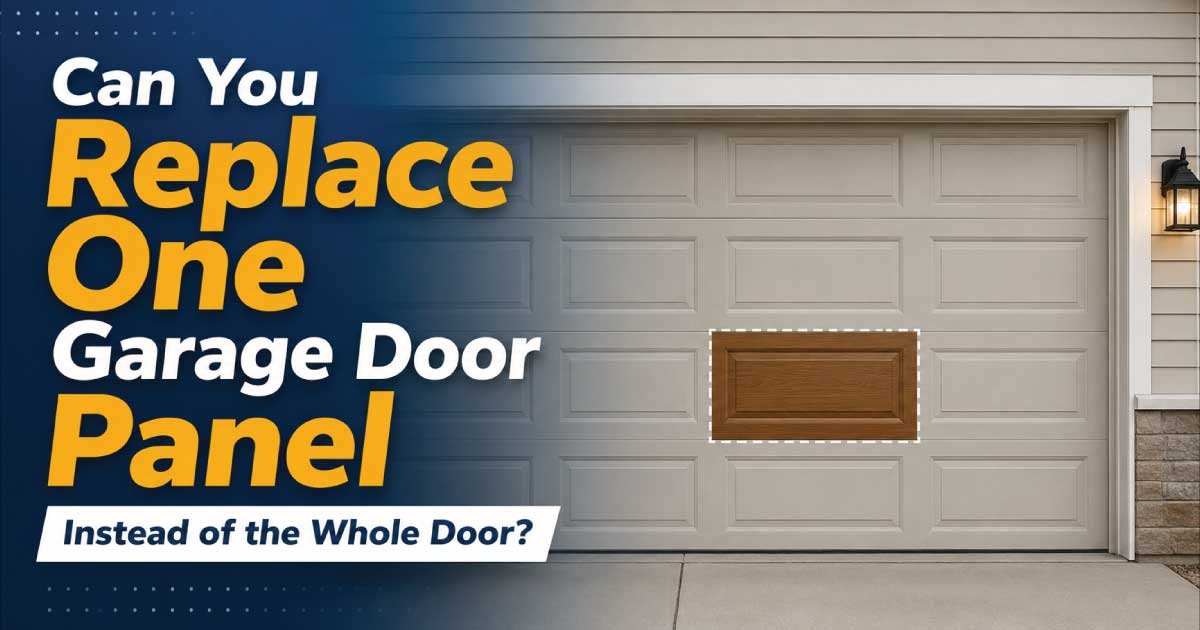
A damaged garage door panel is one of the most common problems homeowners face. Whether the damage comes from accidentally backing into the door, severe weather, or years of wear, many people immediately wonder: Can you replace one garage door panel instead of the whole door? The answer is often yes—but not in every situation.
Replacing a single panel can save hundreds or even thousands of dollars compared to installing a new garage door. However, the success of a panel replacement depends on several factors, including the age of the door, the extent of the damage, the availability of matching panels, and whether the rest of the door remains structurally sound. Ignoring damage can lead to poor door alignment, additional strain on the opener, and even safety hazards.
This repair guide explains how garage door panels work, the warning signs that indicate panel damage, the most common reasons panels need replacement, and how to diagnose the problem safely. You’ll also learn when a simple panel replacement is realistic and when a complete garage door replacement is the smarter long-term investment.
Common Signs and Symptoms
Before deciding whether to replace a single garage door panel or the entire door, it’s important to recognize the symptoms of panel damage. Some issues are purely cosmetic, while others affect the door’s safety and performance. Understanding the difference helps you avoid unnecessary repairs and identify problems before they become more expensive.
Common signs include:
- Visible dents or deep impact damage
- Cracks in steel, aluminum, fiberglass, or wood panels
- Bent or warped sections
- Garage door rubbing against the tracks
- Uneven gaps between panels
- Door shaking or vibrating while opening
- Loud grinding or popping noises
- Door failing to close completely
- Panels separating from hinges
- Rust spreading across damaged metal panels
- Water damage or wood rot on wooden doors
- Insulation exposed through broken panel surfaces
Some homeowners notice only a small dent after accidentally hitting the door with a vehicle. Others discover that the door has become difficult to operate because the damaged panel has affected the door’s balance. Even minor-looking damage can create stress on hinges, rollers, tracks, and the garage door opener over time.
A careful inspection helps determine whether the damage is limited to one section or whether it has spread to other components.
How the Garage Door Normally Works
Understanding how a garage door operates makes it much easier to diagnose whether only one panel has failed or if the damage affects the entire system. A garage door is more than a collection of metal sections—it is a balanced mechanical system in which every part supports the others.
Most residential sectional garage doors consist of multiple horizontal panels connected by hinges. As the door opens, rollers travel along curved tracks while torsion or extension springs counterbalance the door’s weight. The opener guides the movement but should not lift the entire weight on its own.
Each panel contributes to the door’s overall strength. The hinges distribute movement evenly between sections, while reinforcement struts help prevent bending on wider doors. If one panel becomes severely bent, cracked, or twisted, it may interfere with smooth movement and place additional stress on:
- Hinges
- Rollers
- Tracks
- Springs
- Cables
- Garage door opener
When every component is aligned correctly, the door opens quietly, seals evenly against the floor, and operates without excessive vibration. Damage to a single panel can interrupt this balance, which is why proper diagnosis is essential before choosing between a panel replacement and a complete door replacement.
Most Common Reasons This Problem Happens
Garage door panels are built to withstand years of daily use, but they are not indestructible. Knowing why panels become damaged helps homeowners determine whether replacing a single panel is practical or whether underlying issues require more extensive repairs.
Vehicle Impact
The most common cause of panel replacement is accidentally hitting the garage door with a car.
Why it happens:
- Driver misjudges stopping distance.
- Garage door closes unexpectedly.
- Poor visibility.
- Driver forgets the door is closed.
Symptoms:
- Large dents
- Bent lower panel
- Misaligned door
- Scratches or cracked paint
How to identify it:
Inspect the impacted section carefully. If only one panel is damaged while the tracks and frame remain straight, replacing a single panel may be possible.
Severe Weather
High winds, hail, falling branches, and flying debris can damage garage door panels.
Why it happens:
- Wind pressure flexes the panels.
- Heavy hail dents metal surfaces.
- Trees or debris strike the door.
Symptoms:
- Multiple dents
- Cracked fiberglass
- Split wood panels
- Water intrusion
How to identify it:
Look for damage concentrated on the exterior surface. Check whether the surrounding panels remain level and connected properly.
Rust and Corrosion
Metal garage doors can deteriorate over time if moisture reaches exposed steel.
Why it happens:
- Paint damage
- Poor drainage
- High humidity
- Road salt exposure
Symptoms:
- Bubbling paint
- Rust holes
- Weak panel edges
- Flaking metal
How to identify it:
Surface rust can often be repaired, but extensive corrosion that weakens the panel usually requires replacement.
Wood Rot and Moisture Damage
Wooden garage doors require regular maintenance to prevent water damage.
Why it happens:
- Failed paint or stain
- Poor sealing
- Constant moisture exposure
Symptoms:
- Soft wood
- Cracking
- Swelling
- Delamination
How to identify it:
Press gently on suspicious areas using a screwdriver handle. Soft or crumbling wood indicates structural deterioration.
Age and Normal Wear
Garage doors experience thousands of opening and closing cycles during their lifetime.
Why it happens:
- Repeated movement
- Temperature changes
- Material fatigue
Symptoms:
- Small cracks
- Loose fasteners
- Minor warping
- Cosmetic deterioration
How to identify it:
Inspect every panel carefully. If multiple panels show similar aging, replacing only one panel may create noticeable differences in appearance and performance.
Improper Previous Repairs
Temporary repairs sometimes create bigger problems later.
Why it happens:
- Incorrect replacement hardware
- Poorly aligned hinges
- Incompatible panels
- Weak reinforcement
Symptoms:
- Uneven movement
- New cracks
- Loose hinges
- Door binding
How to identify it:
Compare hinge locations and panel alignment with the undamaged sections. Uneven spacing often indicates previous repair issues.
Safety Precautions Before Troubleshooting
Garage doors may look simple, but they are heavy systems operating under significant spring tension. Before inspecting or troubleshooting panel damage, homeowners should take several safety precautions to reduce the risk of injury and prevent additional damage.
Always disconnect the automatic garage door opener before performing a detailed inspection. This prevents someone from accidentally activating the door while you’re working nearby.
Never attempt to loosen, remove, or adjust torsion springs or extension springs. These components store enough energy to cause serious injuries if handled incorrectly. Spring repairs should always be left to trained professionals.
Before inspecting the damaged panel:
- Wear safety glasses.
- Use sturdy work gloves.
- Keep children and pets away from the work area.
- Ensure adequate lighting.
- Use a stable ladder if inspecting upper panels.
- Avoid placing hands near hinges while moving the door.
- Do not operate a door with severely bent tracks or broken cables.
- Stop immediately if the door appears unstable or partially off its tracks.
If the garage door has been struck by a vehicle, inspect the surrounding structure as well. Damage to the tracks, mounting brackets, or framing can make operating the door unsafe, even if only one panel appears damaged.
Tools Required
A careful inspection requires only basic tools. Most homeowners already have these available.
| Tool | Purpose |
|---|---|
| Safety glasses | Protect eyes from debris |
| Work gloves | Prevent cuts from sharp metal edges |
| Flashlight | Inspect hinges, tracks, and panel damage |
| Tape measure | Measure panel dimensions and alignment |
| Level | Check door alignment |
| Step ladder | Safely inspect upper panels |
| Socket wrench set | Tighten loose hardware if necessary |
| Screwdriver set | Inspect brackets and hinge fasteners |
| Camera or smartphone | Photograph damage for repair estimates or insurance claims |
| Notepad | Record measurements and panel model information |
Step-by-Step Troubleshooting Guide
Diagnosing garage door panel damage in the correct order prevents unnecessary repairs and helps determine whether replacing one panel is realistic.
1. Inspect the Damaged Panel
Look closely for dents, cracks, bends, corrosion, or broken sections.
Why it matters:
A cosmetic dent may not require replacement, while structural damage usually does.
Expected result:
You should know whether the damage is superficial or affects the panel’s strength.
What to do next:
Continue checking the surrounding panels for related damage.
2. Examine Adjacent Panels
Damage often spreads beyond the obvious impact area.
Why it matters:
Hidden cracks or twisted hinges may prevent a successful single-panel replacement.
Expected result:
Neighboring panels should remain straight and securely connected.
What to do next:
Inspect all hinges and fasteners.
3. Check Hinges and Rollers
Inspect for loose bolts, cracked hinges, worn rollers, or bent brackets.
Why it matters:
Hardware damage may cause poor door movement even if the panel itself is replaced.
Expected result:
Hardware should move freely without excessive wear.
What to do next:
Inspect the tracks.
4. Inspect the Tracks
Look for bends, gaps, loose mounting brackets, or debris.
Why it matters:
Track damage can mimic panel problems.
Expected result:
Tracks should remain straight and securely attached.
What to do next:
Operate the door manually if it is safe.
5. Test Door Movement
Disconnect the opener and slowly raise the door by hand.
Why it matters:
Smooth movement indicates the structural system remains functional.
Expected result:
The door should move evenly without binding.
What to do next:
Stop immediately if the door sticks or shifts unexpectedly.
6. Check Door Balance
Raise the door halfway and carefully release it.
Why it matters:
Poor balance often points to spring issues rather than panel damage.
Expected result:
The door should remain nearly stationary.
What to do next:
If the door drops quickly or rises on its own, avoid further testing and arrange for professional spring inspection.
7. Verify Panel Availability
Record the manufacturer, model, color, and panel dimensions.
Why it matters:
Older garage doors often have discontinued panel designs.
Expected result:
You’ll know whether a matching replacement panel is still available.
What to do next:
If an exact match cannot be found, compare the cost of custom fabrication with replacing the entire door.
Quick Diagnosis Table
| Symptom | Possible Cause | Recommended Solution |
|---|---|---|
| Single dented panel | Vehicle impact | Inspect structural damage and replace one panel if compatible |
| Cracked panel | Impact or age | Replace damaged panel after checking adjacent sections |
| Door shakes during operation | Bent panel or damaged hardware | Inspect hinges, rollers, and tracks before replacing parts |
| Door binds while opening | Misaligned panel or bent track | Repair alignment and inspect structural damage |
| Rust holes in one panel | Corrosion | Replace affected panel if the remaining door is in good condition |
| Several damaged panels | Storm damage or aging | Compare multiple panel replacement costs with a new door |
| Uneven door gaps | Frame or panel distortion | Perform a full system inspection before choosing repairs |
| Door no longer seals properly | Warped lower panel | Replace the bottom panel if the rest of the door is structurally sound |

Engineer Ali Hasan is a garage door expert and the founder of FixFasty. With over 16 years of experience in mechanical systems and home maintenance, he provides practical, step-by-step guides on garage door installation, repairs, and maintenance, helping homeowners keep their garage doors safe, reliable, and long-lasting.