
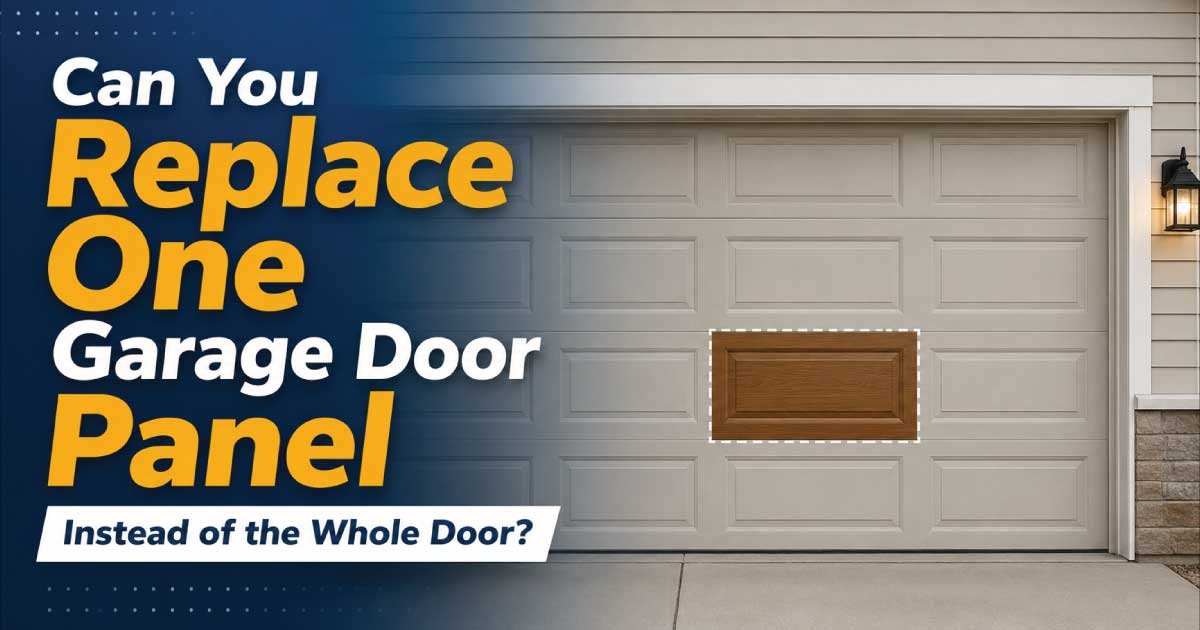
Can You Replace One Garage Door Panel Instead of the Whole Door?

A damaged garage door panel is one of the most common problems homeowners face. Whether the damage comes from accidentally backing into the door, severe weather, or years of wear, many people immediately wonder: Can you replace one garage door panel instead of the whole door? The answer is often yes—but not in every situation.

Replacing a single panel can save hundreds or even thousands of dollars compared to installing a new garage door. However, the success of a panel replacement depends on several factors, including the age of the door, the extent of the damage, the availability of matching panels, and whether the rest of the door remains structurally sound. Ignoring damage can lead to poor door alignment, additional strain on the opener, and even safety hazards.

This repair guide explains how garage door panels work, the warning signs that indicate panel damage, the most common reasons panels need replacement, and how to diagnose the problem safely. You’ll also learn when a simple panel replacement is realistic and when a complete garage door replacement is the smarter long-term investment.


Common Signs and Symptoms

Before deciding whether to replace a single garage door panel or the entire door, it’s important to recognize the symptoms of panel damage. Some issues are purely cosmetic, while others affect the door’s safety and performance. Understanding the difference helps you avoid unnecessary repairs and identify problems before they become more expensive.

Common signs include:

  • Visible dents or deep impact damage
  • Cracks in steel, aluminum, fiberglass, or wood panels
  • Bent or warped sections
  • Garage door rubbing against the tracks
  • Uneven gaps between panels
  • Door shaking or vibrating while opening
  • Loud grinding or popping noises
  • Door failing to close completely
  • Panels separating from hinges
  • Rust spreading across damaged metal panels
  • Water damage or wood rot on wooden doors
  • Insulation exposed through broken panel surfaces

Some homeowners notice only a small dent after accidentally hitting the door with a vehicle. Others discover that the door has become difficult to operate because the damaged panel has affected the door’s balance. Even minor-looking damage can create stress on hinges, rollers, tracks, and the garage door opener over time.

A careful inspection helps determine whether the damage is limited to one section or whether it has spread to other components.


How the Garage Door Normally Works

Understanding how a garage door operates makes it much easier to diagnose whether only one panel has failed or if the damage affects the entire system. A garage door is more than a collection of metal sections—it is a balanced mechanical system in which every part supports the others.

Most residential sectional garage doors consist of multiple horizontal panels connected by hinges. As the door opens, rollers travel along curved tracks while torsion or extension springs counterbalance the door’s weight. The opener guides the movement but should not lift the entire weight on its own.

Each panel contributes to the door’s overall strength. The hinges distribute movement evenly between sections, while reinforcement struts help prevent bending on wider doors. If one panel becomes severely bent, cracked, or twisted, it may interfere with smooth movement and place additional stress on:

  • Hinges
  • Rollers
  • Tracks
  • Springs
  • Cables
  • Garage door opener

When every component is aligned correctly, the door opens quietly, seals evenly against the floor, and operates without excessive vibration. Damage to a single panel can interrupt this balance, which is why proper diagnosis is essential before choosing between a panel replacement and a complete door replacement.


Most Common Reasons This Problem Happens

Garage door panels are built to withstand years of daily use, but they are not indestructible. Knowing why panels become damaged helps homeowners determine whether replacing a single panel is practical or whether underlying issues require more extensive repairs.

Vehicle Impact

The most common cause of panel replacement is accidentally hitting the garage door with a car.

Why it happens:

  • Driver misjudges stopping distance.
  • Garage door closes unexpectedly.
  • Poor visibility.
  • Driver forgets the door is closed.

Symptoms:

  • Large dents
  • Bent lower panel
  • Misaligned door
  • Scratches or cracked paint

How to identify it:

Inspect the impacted section carefully. If only one panel is damaged while the tracks and frame remain straight, replacing a single panel may be possible.

Severe Weather

High winds, hail, falling branches, and flying debris can damage garage door panels.

Why it happens:

  • Wind pressure flexes the panels.
  • Heavy hail dents metal surfaces.
  • Trees or debris strike the door.

Symptoms:

  • Multiple dents
  • Cracked fiberglass
  • Split wood panels
  • Water intrusion

How to identify it:

Look for damage concentrated on the exterior surface. Check whether the surrounding panels remain level and connected properly.


Rust and Corrosion

Metal garage doors can deteriorate over time if moisture reaches exposed steel.

Why it happens:

  • Paint damage
  • Poor drainage
  • High humidity
  • Road salt exposure

Symptoms:

  • Bubbling paint
  • Rust holes
  • Weak panel edges
  • Flaking metal

How to identify it:

Surface rust can often be repaired, but extensive corrosion that weakens the panel usually requires replacement.

Wood Rot and Moisture Damage

Wooden garage doors require regular maintenance to prevent water damage.

Why it happens:

  • Failed paint or stain
  • Poor sealing
  • Constant moisture exposure

Symptoms:

  • Soft wood
  • Cracking
  • Swelling
  • Delamination

How to identify it:

Press gently on suspicious areas using a screwdriver handle. Soft or crumbling wood indicates structural deterioration.

Age and Normal Wear

Garage doors experience thousands of opening and closing cycles during their lifetime.

Why it happens:

  • Repeated movement
  • Temperature changes
  • Material fatigue

Symptoms:

  • Small cracks
  • Loose fasteners
  • Minor warping
  • Cosmetic deterioration

How to identify it:

Inspect every panel carefully. If multiple panels show similar aging, replacing only one panel may create noticeable differences in appearance and performance.

Improper Previous Repairs

Temporary repairs sometimes create bigger problems later.

Why it happens:

  • Incorrect replacement hardware
  • Poorly aligned hinges
  • Incompatible panels
  • Weak reinforcement

Symptoms:

  • Uneven movement
  • New cracks
  • Loose hinges
  • Door binding

How to identify it:

Compare hinge locations and panel alignment with the undamaged sections. Uneven spacing often indicates previous repair issues.


Safety Precautions Before Troubleshooting

Garage doors may look simple, but they are heavy systems operating under significant spring tension. Before inspecting or troubleshooting panel damage, homeowners should take several safety precautions to reduce the risk of injury and prevent additional damage.

Always disconnect the automatic garage door opener before performing a detailed inspection. This prevents someone from accidentally activating the door while you’re working nearby.

Never attempt to loosen, remove, or adjust torsion springs or extension springs. These components store enough energy to cause serious injuries if handled incorrectly. Spring repairs should always be left to trained professionals.

Before inspecting the damaged panel:

  • Wear safety glasses.
  • Use sturdy work gloves.
  • Keep children and pets away from the work area.
  • Ensure adequate lighting.
  • Use a stable ladder if inspecting upper panels.
  • Avoid placing hands near hinges while moving the door.
  • Do not operate a door with severely bent tracks or broken cables.
  • Stop immediately if the door appears unstable or partially off its tracks.

If the garage door has been struck by a vehicle, inspect the surrounding structure as well. Damage to the tracks, mounting brackets, or framing can make operating the door unsafe, even if only one panel appears damaged.


Tools Required

A careful inspection requires only basic tools. Most homeowners already have these available.

Tool Purpose
Safety glasses Protect eyes from debris
Work gloves Prevent cuts from sharp metal edges
Flashlight Inspect hinges, tracks, and panel damage
Tape measure Measure panel dimensions and alignment
Level Check door alignment
Step ladder Safely inspect upper panels
Socket wrench set Tighten loose hardware if necessary
Screwdriver set Inspect brackets and hinge fasteners
Camera or smartphone Photograph damage for repair estimates or insurance claims
Notepad Record measurements and panel model information

Step-by-Step Troubleshooting Guide

Diagnosing garage door panel damage in the correct order prevents unnecessary repairs and helps determine whether replacing one panel is realistic.

1. Inspect the Damaged Panel

Look closely for dents, cracks, bends, corrosion, or broken sections.

Why it matters:
A cosmetic dent may not require replacement, while structural damage usually does.

Expected result:
You should know whether the damage is superficial or affects the panel’s strength.

What to do next:
Continue checking the surrounding panels for related damage.

2. Examine Adjacent Panels

Damage often spreads beyond the obvious impact area.

Why it matters:
Hidden cracks or twisted hinges may prevent a successful single-panel replacement.

Expected result:
Neighboring panels should remain straight and securely connected.

What to do next:
Inspect all hinges and fasteners.

3. Check Hinges and Rollers

Inspect for loose bolts, cracked hinges, worn rollers, or bent brackets.

Why it matters:
Hardware damage may cause poor door movement even if the panel itself is replaced.

Expected result:
Hardware should move freely without excessive wear.

What to do next:
Inspect the tracks.

4. Inspect the Tracks

Look for bends, gaps, loose mounting brackets, or debris.

Why it matters:
Track damage can mimic panel problems.

Expected result:
Tracks should remain straight and securely attached.

What to do next:
Operate the door manually if it is safe.

5. Test Door Movement

Disconnect the opener and slowly raise the door by hand.

Why it matters:
Smooth movement indicates the structural system remains functional.

Expected result:
The door should move evenly without binding.

What to do next:
Stop immediately if the door sticks or shifts unexpectedly.

6. Check Door Balance

Raise the door halfway and carefully release it.

Why it matters:
Poor balance often points to spring issues rather than panel damage.

Expected result:
The door should remain nearly stationary.

What to do next:
If the door drops quickly or rises on its own, avoid further testing and arrange for professional spring inspection.

7. Verify Panel Availability

Record the manufacturer, model, color, and panel dimensions.

Why it matters:
Older garage doors often have discontinued panel designs.

Expected result:
You’ll know whether a matching replacement panel is still available.

What to do next:
If an exact match cannot be found, compare the cost of custom fabrication with replacing the entire door.


Quick Diagnosis Table

Symptom Possible Cause Recommended Solution
Single dented panel Vehicle impact Inspect structural damage and replace one panel if compatible
Cracked panel Impact or age Replace damaged panel after checking adjacent sections
Door shakes during operation Bent panel or damaged hardware Inspect hinges, rollers, and tracks before replacing parts
Door binds while opening Misaligned panel or bent track Repair alignment and inspect structural damage
Rust holes in one panel Corrosion Replace affected panel if the remaining door is in good condition
Several damaged panels Storm damage or aging Compare multiple panel replacement costs with a new door
Uneven door gaps Frame or panel distortion Perform a full system inspection before choosing repairs
Door no longer seals properly Warped lower panel Replace the bottom panel if the rest of the door is structurally sound

How to Fix Each Common Cause

Once you’ve completed the troubleshooting process, the next step is deciding how to repair the problem. In some cases, replacing a single garage door panel is a practical and cost-effective solution. In others, repairing related components or replacing the entire door provides better long-term value. The key is fixing the underlying cause—not just the visible damage.

Replace a Damaged Panel After Vehicle Impact

A vehicle collision usually damages the bottom panel, although harder impacts may affect multiple sections.

How to fix it:

  1. Confirm that the tracks, hinges, rollers, and frame are not bent.
  2. Identify the garage door manufacturer and model number.
  3. Order an exact replacement panel with the same dimensions, insulation type, and finish.
  4. Remove the damaged panel by disconnecting the hinges and hardware after securing the door in place.
  5. Install the replacement panel and reconnect all hardware.
  6. Test the door manually before reconnecting the opener.

DIY or professional?

A homeowner with mechanical experience may replace an upper panel on a lightweight door. However, replacing the bottom panel or any panel connected to spring hardware is usually safer as a professional repair because incorrect installation can affect door balance.

Repair Minor Cosmetic Damage

Not every dent requires panel replacement.

Small dents in steel panels can sometimes be repaired using:

  • Automotive body filler
  • Sanding
  • Primer
  • Exterior-grade paint

Shallow dents that do not affect structural integrity are often worth repairing, especially if replacement panels are discontinued or expensive.

Keep in mind that cosmetic repairs improve appearance but do not restore strength if the panel has stretched or folded.

Replace Rusted Metal Panels

Surface rust should be treated before it spreads.

For minor corrosion:

  1. Remove loose rust with a wire brush.
  2. Sand the affected area.
  3. Apply a rust converter if needed.
  4. Prime and repaint the panel.

If rust has created holes or weakened the metal, replacement is the better option because structural integrity has already been compromised.

Replace Water-Damaged Wooden Panels

Wood panels affected by rot continue to deteriorate even after drying.

If damage is localized:

  • Replace the affected panel.
  • Seal exposed wood immediately.
  • Paint or stain the new panel to match the existing finish.

If several wooden panels have deteriorated, replacing the complete door is often more economical than repairing each section individually.

Tighten or Replace Damaged Hardware

Sometimes the panel itself is still usable.

Replace worn:

  • Hinges
  • Roller brackets
  • Fasteners
  • Reinforcement struts

Always use manufacturer-approved replacement hardware because incorrect hinge sizes can affect panel spacing and door movement.

Replace Multiple Panels Carefully

Replacing two or three panels can restore function if matching parts remain available.

However, compare the repair cost with a complete door replacement. Once repair costs approach half the price of a new door, installing a new system often provides better long-term value, improved insulation, and updated safety features.


Advanced Troubleshooting

Sometimes a damaged panel is only one symptom of a larger problem. Advanced troubleshooting helps identify hidden issues that may prevent a successful repair or cause future failures.

Check for Frame Distortion

A strong vehicle impact can shift the garage door opening itself.

Signs include:

  • Uneven gaps around the door
  • Door rubbing one side
  • Difficulty closing completely

Measure both diagonal corners of the opening. Significant differences may indicate structural movement requiring professional evaluation.

Inspect Reinforcement Struts

Many insulated and double-wide garage doors include horizontal reinforcement bars.

Inspect for:

  • Bending
  • Cracks
  • Loose mounting screws

Bent reinforcement members reduce panel strength even if the panel appears relatively undamaged.

Examine the Garage Door Opener

A damaged panel can overload the opener.

Look for:

  • Slower operation
  • Motor straining
  • Reversed closing cycle
  • Excessive vibration

Modern openers may also display diagnostic lights indicating excessive resistance.

If the opener struggles after replacing the panel, the problem may involve spring tension or door balance rather than the opener itself.

Verify Spring Balance

Garage door springs wear gradually.

Symptoms include:

  • Heavy manual lifting
  • Door drifting open
  • Door slamming shut
  • Opener working harder than usual

Because spring adjustment involves stored mechanical energy, homeowners should not attempt this repair without proper training and specialized tools.

Look for Hidden Panel Separation

Insulated garage doors often consist of multiple bonded layers.

After an impact, inspect for:

  • Separation between layers
  • Bulging insulation
  • Loose outer skin

These problems reduce insulation performance and structural strength even when exterior damage appears minor.


When Repair Is Not Worth It

Replacing one garage door panel is not always the smartest investment. There are situations where installing a new garage door saves money over time and provides better reliability.

Replacement is generally the better choice when:

  • Matching replacement panels are no longer manufactured.
  • More than two or three panels are damaged.
  • The tracks are severely bent.
  • The frame has shifted.
  • Springs, cables, and hardware also require major repairs.
  • The door has widespread rust or wood rot.
  • The door is over 20 years old and showing multiple signs of wear.
  • Repair costs approach the price of a complete replacement.

Another consideration is appearance. Even if a replacement panel fits perfectly, years of sun exposure may leave older panels faded. A new panel can stand out noticeably, reducing curb appeal.

Modern garage doors also offer improved insulation, stronger construction, quieter operation, and better energy efficiency than many older models. In some cases, investing in a complete replacement increases home value while reducing future maintenance costs.


Preventive Maintenance Tips

Most garage door panel damage cannot be prevented entirely, but regular maintenance significantly reduces the risk of expensive repairs.

Good preventive maintenance includes:

  • Inspect the entire door every few months for dents, cracks, and loose hardware.
  • Tighten loose bolts and hinge fasteners.
  • Lubricate rollers, hinges, and bearings with garage door lubricant.
  • Keep tracks clean and free of debris.
  • Wash steel doors periodically to remove dirt and road salt.
  • Touch up paint chips before rust develops.
  • Repaint or reseal wooden doors as recommended by the manufacturer.
  • Test the door balance every few months.
  • Replace worn weather seals to reduce moisture intrusion.
  • Never drive into the garage until the door is fully open.

Routine inspections often identify small problems before they become structural failures requiring costly repairs.


Common Mistakes to Avoid

Many homeowners unintentionally make repairs more expensive by overlooking early warning signs or attempting unsafe fixes.

Avoid these common mistakes:

  • Continuing to operate a severely damaged garage door.
  • Assuming every dent requires complete door replacement.
  • Ignoring bent tracks after a vehicle impact.
  • Installing a mismatched replacement panel.
  • Attempting torsion spring repairs without training.
  • Using incorrect replacement hinges or hardware.
  • Painting over active rust without treating it first.
  • Delaying repairs after water damage.
  • Forgetting to inspect the garage door opener after an impact.
  • Purchasing replacement panels without verifying manufacturer specifications.

A careful diagnosis almost always saves money compared to replacing parts based on guesswork.


When to Call a Professional

Some garage door repairs are well within the abilities of experienced homeowners, while others involve serious safety risks.

Consider hiring a qualified garage door technician if:

  • Springs require adjustment or replacement.
  • Cables are frayed or broken.
  • The door has come off its tracks.
  • The frame or opening appears damaged.
  • Multiple panels require replacement.
  • The opener continues malfunctioning after repairs.
  • Replacement panels require structural alignment.
  • The garage door weighs too much to handle safely.
  • You cannot locate matching replacement panels.
  • The cause of the problem remains unclear after inspection.

Professional technicians can also determine whether repairing the existing door or replacing the entire system offers the better long-term investment.


Estimated Repair Costs

Repair Estimated Cost DIY or Professional
Minor dent repair $50–$150 DIY
Surface rust treatment $25–$100 DIY
Replace one garage door panel $250–$900 Professional recommended
Replace bottom panel $300–$1,000 Professional
Replace hinges or rollers $75–$250 DIY or Professional
Track alignment $125–$350 Professional
Garage door spring replacement $200–$500 Professional
Complete garage door replacement $900–$3,500+ Professional

Actual costs vary depending on the door material, insulation, size, manufacturer, labor rates, and regional pricing.

Frequently Asked Questions

1. Can you replace one garage door panel instead of the whole door?

Yes, you can replace one garage door panel if the remaining door is structurally sound and a matching replacement panel is still available. The tracks, springs, and frame should also be undamaged. A professional inspection helps confirm whether a single-panel replacement will restore safe and reliable operation.

2. How do I know if only one panel needs replacing?

Inspect the entire garage door before making a decision. If damage is limited to one panel and the door still operates smoothly without track or hardware damage, replacing only that section is often possible. Hidden structural issues should always be ruled out before ordering replacement parts.

3. Is replacing one garage door panel cheaper than buying a new door?

Yes, replacing one panel is usually less expensive when the rest of the door is in good condition. However, if multiple panels are damaged or replacement parts are difficult to find, the total repair cost may approach the price of installing a completely new garage door.

4. Can I replace a garage door panel myself?

Some homeowners can replace a panel on lightweight sectional doors, but caution is essential. If the repair involves spring components, bottom brackets, or heavy insulated panels, professional installation is the safer option because improper repairs can create serious safety hazards.

5. What happens if I leave a damaged garage door panel unrepaired?

A damaged panel can place extra stress on the entire garage door system. Over time, this may cause premature wear on rollers, hinges, tracks, springs, and the opener. Delaying repairs can also allow moisture, rust, or structural deterioration to spread.

6. Are replacement panels available for older garage doors?

Sometimes, but not always. Manufacturers eventually discontinue older designs, colors, and panel styles. If an exact replacement is unavailable, homeowners may need to consider custom fabrication or replacing the entire garage door to maintain proper appearance and compatibility.

7. Does replacing one panel affect the garage door warranty?

It can, depending on the manufacturer and who performs the repair. Some warranties require approved replacement parts and professional installation. Review the warranty documentation or contact the manufacturer before beginning repairs to avoid unintentionally voiding coverage.

8. Will the new panel match the rest of my garage door?

Not always. Even if the replacement panel has the correct design, years of sunlight and weather exposure may cause the existing panels to fade. Painting the entire door or replacing it altogether may provide a more consistent appearance if color matching is important.

9. Can a bent garage door panel be repaired instead of replaced?

Minor dents and shallow bends can often be repaired if the panel remains structurally sound. Deep folds, cracked materials, or twisted sections generally weaken the panel too much for reliable repair, making replacement the safer and longer-lasting solution.

10. How long does a professional garage door panel replacement take?

Most single-panel replacements take between one and three hours once the correct replacement part is available. More time may be needed if hardware, tracks, or alignment issues are discovered during the repair or if adjustments are required to restore smooth operation.


Final Thoughts

Can you replace one garage door panel instead of the whole door? In many cases, yes—but only after a careful inspection confirms that the damage is isolated and the rest of the garage door system remains in good condition. A single-panel replacement can be an excellent way to restore your door while saving money, especially when matching parts are readily available and no structural components have been affected.

The most important step is accurate diagnosis. What appears to be a simple dent may hide damaged tracks, worn hardware, or balance problems that require additional repairs. By following a systematic troubleshooting process, understanding the warning signs, and observing proper safety precautions, homeowners can make informed decisions about whether a DIY repair is appropriate or if a professional repair is the safer choice.

Regular inspections, prompt maintenance, and addressing minor damage early will help extend the life of your garage door, improve safety, and reduce the likelihood of costly repairs in the future. When in doubt, seek professional guidance—protecting the integrity of your garage door is always a worthwhile investment.

Leave a Comment