
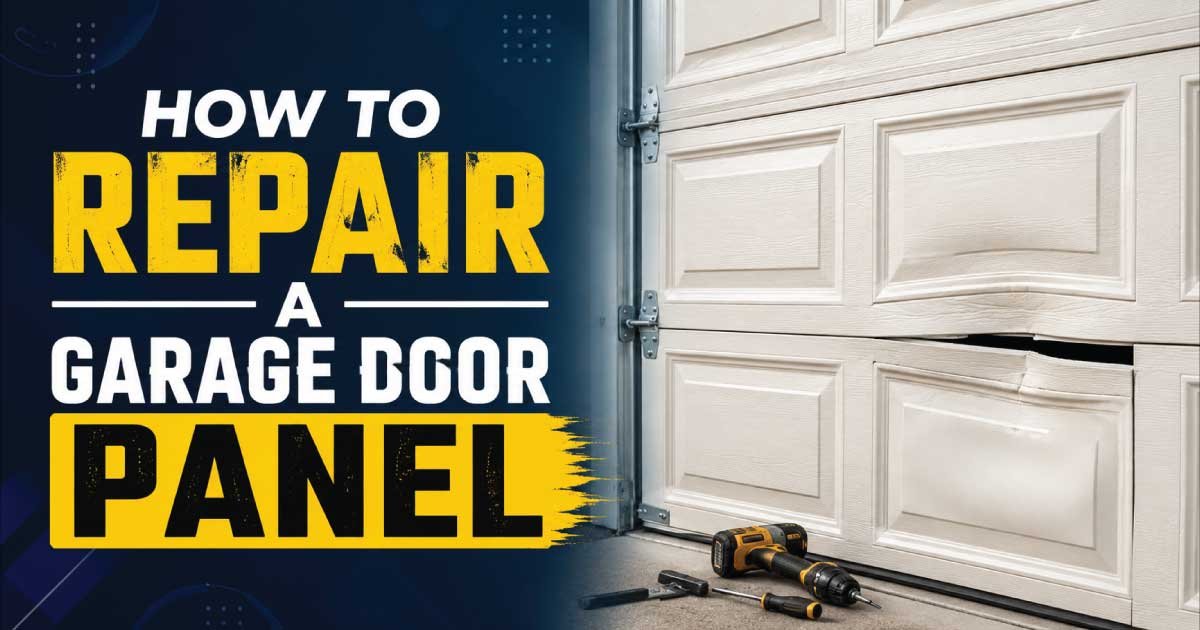
A damaged garage door panel is more than a cosmetic problem. It can affect how smoothly your garage door opens and closes, place extra stress on the tracks and opener, and even create safety risks if left unattended. Whether the panel has a dent from a vehicle, damage from severe weather, rust, or cracking due to age, addressing the issue early often prevents more expensive repairs later.
This how to repair a garage door panel guide explains how to identify the problem, understand why it happens, and troubleshoot it safely before deciding whether a simple repair is enough or if professional help is needed. You’ll learn how garage door panels work with the rest of the door system, what warning signs to watch for, the most common causes of panel damage, essential safety precautions, the tools you’ll need, and a logical troubleshooting process that helps you pinpoint the real issue. By the end of this section, you’ll have a clear understanding of whether your garage door panel is a good candidate for DIY repair or whether a more extensive solution is the safer choice.
Common Signs and Symptoms
Recognizing the early signs of garage door panel damage helps prevent additional wear on the entire door system. Some problems develop gradually, while others appear immediately after an impact. Inspecting the door carefully before attempting repairs can save time and reduce the risk of making the problem worse.
Common symptoms include:
- Visible dents or creases in one or more panels
- Cracked wood, aluminum, fiberglass, or steel sections
- Rust or corrosion around the damaged area
- Gaps between adjacent panels
- The garage door appears uneven when closed
- The door binds or jerks while opening
- Excessive vibration during operation
- Unusual grinding, scraping, or popping noises
- The opener struggles to lift the door
- Weather seals no longer sit evenly against the ground
- Light entering through gaps around damaged sections
- Loose hinges attached to the affected panel
Some homeowners first notice the problem after accidentally backing into the garage door. Others discover damage following a hailstorm, falling tree branch, or years of repeated use. Even a small dent can eventually affect door alignment if ignored.
How the Garage Door System Normally Works
Understanding how the garage door operates makes it easier to diagnose whether the panel itself is the problem or whether another component is causing similar symptoms. Garage doors rely on several parts working together under carefully balanced tension.
A sectional garage door consists of multiple horizontal panels connected by hinges. Rollers attached to the sides of each panel travel inside vertical and horizontal tracks as the door opens and closes.
The springs perform most of the lifting work. Extension springs stretch along the horizontal tracks, while torsion springs mount above the door opening. These springs counterbalance the weight of the door so the opener only guides movement instead of carrying the entire load.
The garage door opener moves the door using a belt, chain, or screw drive connected to the top section. As the opener pulls the door upward, each panel bends slightly at the hinges, allowing the door to follow the curved track.
When one panel becomes bent, cracked, or weakened, it changes how the door distributes weight.
That imbalance can place additional stress on:
- Hinges
- Rollers
- Tracks
- Springs
- The automatic opener
For this reason, a damaged panel should never be viewed as only an appearance issue. It often affects the entire system over time.
Most Common Reasons This Problem Happens
Garage door panels can fail for several different reasons. Identifying the exact cause helps determine whether repair is practical or whether replacement is the better long-term solution.
Vehicle Impact
Vehicle accidents remain the most common cause of panel damage. Even a slow-speed bump from a car, truck, motorcycle, or lawn equipment can dent or bend the lower panels.
Why it happens
Many drivers accidentally reverse before the door fully opens or misjudge stopping distance.
Symptoms
- Large dents
- Creased metal
- Bent reinforcement bars
- Misaligned door sections
How to identify it
Look for obvious impact marks, chipped paint, distorted panel edges, or damaged hinges near the affected area.
Severe Weather
Weather can shorten the lifespan of garage door panels, especially in areas with frequent storms.
Why it happens
Hail, high winds, flying debris, heavy snow, and repeated moisture exposure gradually weaken materials.
Symptoms
- Small dents
- Surface cracks
- Rust spots
- Warped wood
- Water damage
How to identify it
Inspect both sides of each panel after severe weather, paying close attention to corners and lower sections where moisture often collects.
Age and Material Fatigue
Garage doors naturally wear out after years of daily use.
Why it happens
Repeated opening and closing create stress around hinge mounting points and panel joints.
Symptoms
- Hairline cracks
- Loose fasteners
- Sagging sections
- Minor separation between panels
How to identify it
Check older doors for weakened metal around hinge screws or wood splitting near hardware.
Rust and Corrosion
Steel garage doors eventually develop corrosion if protective finishes become damaged.
Why it happens
Scratches expose bare metal to moisture, leading to oxidation.
Symptoms
- Bubbling paint
- Orange or brown stains
- Flaking metal
- Soft spots
How to identify it
Probe suspicious areas gently with a screwdriver. Rusted sections often feel thinner than surrounding metal.
Poor Maintenance
Small maintenance issues often grow into expensive repairs.
Why it happens
Loose hardware, dirty tracks, worn rollers, and neglected lubrication increase stress throughout the door.
Symptoms
- Rattling
- Uneven movement
- Loose hinges
- Panel flexing
How to identify it
Inspect all mounting screws, brackets, and hinges while manually moving the door.
Improper Previous Repairs
Temporary fixes sometimes create larger structural problems.
Why it happens
Incorrect fasteners, excessive filler, or poorly aligned replacement parts weaken the panel.
Symptoms
- Repeated cracking
- Loose patches
- Uneven movement
- Hardware pulling away
How to identify it
Look for mismatched screws, fresh sealant, excessive body filler, or homemade reinforcement plates.
Safety Precautions Before Troubleshooting
Garage doors are heavy, and several components operate under extremely high spring tension. Before beginning any inspection or DIY repair, take time to prepare the work area and eliminate avoidable hazards. Many injuries occur because homeowners underestimate the stored energy in the springs or attempt repairs while the opener remains connected.
Follow these safety precautions before troubleshooting:
- Disconnect electrical power to the garage door opener.
- Pull the emergency release cord only when the door is fully closed unless the manufacturer’s instructions say otherwise.
- Never loosen, adjust, or remove torsion springs without proper training and specialized tools.
- Wear safety glasses to protect against flying debris.
- Use sturdy work gloves when handling damaged metal edges.
- Wear closed-toe shoes with good traction.
- Keep children and pets away from the work area.
- Use a stable ladder on a level surface.
- Avoid placing fingers between connected panels.
- Secure the door if it must remain partially open during inspection.
- Replace damaged tools before beginning work.
- Do not operate an automatic opener if the door appears severely bent or off its tracks.
If the panel damage causes the door to lean, bind, or partially collapse, stop troubleshooting immediately. Structural instability can indicate additional hidden damage that requires professional inspection.
Tools Required
Before starting the inspection process, gather the tools you are most likely to need. Having everything nearby reduces interruptions and allows you to inspect the entire garage door systematically rather than making repeated trips for equipment.
| Tool | Purpose |
|---|---|
| Safety glasses | Protect eyes during inspection and repair |
| Work gloves | Prevent cuts from sharp metal edges |
| Flashlight | Inspect hinges, tracks, and hidden damage |
| Tape measure | Measure dents, gaps, and panel alignment |
| Socket set | Tighten or remove hardware |
| Adjustable wrench | Remove bolts and brackets |
| Screwdriver set | Tighten hinges and fasteners |
| Rubber mallet | Gently reshape minor dents without damaging paint |
| Level | Check door alignment |
| Step ladder | Reach upper panels safely |
| Cleaning cloth | Remove dirt before inspection |
| Mild household cleaner | Clean damaged areas before assessing repairs |
Step-by-Step Troubleshooting Guide
Troubleshooting the garage door in a logical sequence prevents unnecessary repairs and helps identify whether the panel is truly responsible for the problem. Complete each step before moving to the next.
1. Inspect the entire door from outside
What to inspect
Stand several feet away and examine all panels.
Why it matters
Damage may extend beyond the most noticeable dent.
Expected result
You should identify obvious dents, cracks, rust, or warped sections.
What to do next
Mark each damaged area before beginning a closer inspection.
2. Check panel alignment
What to inspect
Look for uneven spacing between panels and around the garage opening.
Why it matters
Misalignment often indicates structural damage rather than cosmetic damage.
Expected result
Panels should sit evenly with consistent gaps.
What to do next
If large gaps exist, continue inspecting hinges and tracks.
3. Examine hinges and fasteners
What to inspect
Check every hinge attached to the damaged panel.
Why it matters
Loose hardware often causes movement that resembles panel failure.
Expected result
Hinges should remain firmly attached with no missing screws.
What to do next
Tighten loose hardware before assuming the panel requires replacement.
4. Inspect the tracks
What to inspect
Look for bends, dents, or debris inside the tracks.
Why it matters
Track damage can create binding even when the panel is undamaged.
Expected result
Tracks should remain straight and free of obstructions.
What to do next
Clean debris and note any bends requiring repair.
5. Test manual door movement
What to inspect
Disconnect the opener and carefully raise the door by hand.
Why it matters
Manual operation helps separate opener issues from mechanical problems.
Expected result
The door should move smoothly without sticking.
What to do next
If movement becomes difficult near one panel, inspect that section more closely.
6. Inspect rollers
What to inspect
Check each roller near the damaged panel.
Why it matters
Broken rollers often accompany panel impacts.
Expected result
Rollers should rotate freely without wobbling.
What to do next
Replace worn rollers if necessary before evaluating panel movement.
7. Evaluate structural damage
What to inspect
Determine whether the panel damage is cosmetic or structural.
Why it matters
Minor dents often remain repairable, while deep creases weaken the entire section.
Expected result
You should know whether repair appears practical.
What to do next
If the panel shows severe cracking, twisting, or separated reinforcement, avoid operating the door until further repairs are completed.
Quick Diagnosis Table
This quick-reference guide summarizes the most common garage door panel problems and their likely causes. Use it as a starting point before beginning repairs or deciding whether professional assistance is necessary.
| Symptom | Possible Cause | Recommended Solution |
|---|---|---|
| Small dent | Minor impact | Repair or reshape panel if structurally sound |
| Large crease | Vehicle collision | Inspect for structural damage and consider panel replacement |
| Rust spots | Moisture exposure | Remove rust, treat corrosion, and repaint |
| Panel cracked | Impact or aging | Assess crack size and repair or replace panel |
| Door sticks while opening | Bent panel or track | Inspect alignment before further operation |
| Uneven door | Structural panel damage | Inspect hinges, tracks, and panel integrity |
| Loud popping noise | Loose hinge or distorted panel | Tighten hardware and inspect for hidden damage |
| Opener struggles | Door imbalance or damaged panel | Stop using the opener until the underlying cause is identified |
How to Fix Each Common Cause
Now that you’ve identified the likely source of the problem, you can decide on the most appropriate repair. The right method depends on the type of damage, the panel material, and whether the damage is cosmetic or structural. Always complete the safety checks described earlier before attempting any repair.
Repairing Minor Dents in Steel Panels
Small dents are often repairable if the panel has not folded sharply or cracked.
Steps:
- Clean the damaged area with mild detergent and allow it to dry.
- Inspect the back of the panel if accessible.
- Place a wooden block against the dent.
- Tap gently with a rubber mallet to work the metal back into shape.
- Continue using light, even blows instead of heavy impacts.
- Smooth any remaining imperfections with automotive body filler if recommended by the manufacturer.
- Sand lightly after the filler cures.
- Apply primer and matching exterior paint to protect against corrosion.
Best for:
- Small dents
- Shallow depressions
- Cosmetic damage
Avoid hammering directly on painted metal, as this often creates additional dents and chips the finish.
Repairing Small Cracks in Fiberglass Panels
Fiberglass panels can develop cracks from impacts or prolonged exposure to sunlight.
Steps:
- Clean the damaged area thoroughly.
- Sand around the crack to improve adhesion.
- Apply a fiberglass repair kit according to the manufacturer’s instructions.
- Allow the resin to cure completely.
- Sand the repaired area until smooth.
- Repaint if necessary.
A properly repaired fiberglass crack can restore strength when the surrounding material remains in good condition.
Repairing Wooden Garage Door Panels
Wood panels often crack, split, or rot instead of denting.
Minor repairs include:
- Filling small cracks with exterior wood filler
- Sanding rough areas
- Replacing loose screws
- Sealing exposed wood
- Applying weather-resistant paint or stain
If rot extends deep into the panel, replacement is usually more reliable than attempting extensive repairs.
Removing Surface Rust
Rust spreads quickly once protective paint fails.
Repair process:
- Scrape loose rust using a wire brush.
- Sand the affected area until clean metal is visible.
- Wipe away dust.
- Apply a rust converter if needed.
- Prime the repaired section.
- Finish with exterior-grade paint.
Addressing rust early prevents holes from forming in steel panels.
Tightening Loose Hardware
Panel movement sometimes results from loose hinges instead of actual panel damage.
Inspect:
- Hinge screws
- Bolts
- Reinforcement brackets
- Roller brackets
Replace stripped screws rather than overtightening them. If mounting holes have enlarged, the panel itself may require replacement.
Replacing a Single Garage Door Panel
Many homeowners assume an entire garage door must be replaced after one panel is damaged. In many cases, replacing only the affected panel is possible.
A single-panel replacement works best when:
- The manufacturer still produces matching panels.
- The remaining door sections are in good condition.
- The frame has not twisted.
- The tracks remain properly aligned.
Panel replacement becomes difficult for older doors because matching styles and colors may no longer be available.
Advanced Troubleshooting
Some garage door problems are less obvious than a visible dent. If basic troubleshooting doesn’t identify the cause, inspect the rest of the system carefully before replacing any parts. Hidden issues can mimic panel damage and lead to unnecessary repairs.
Check Door Balance
An unbalanced door places excessive strain on both the panels and opener.
To test balance:
- Disconnect the opener.
- Raise the door halfway manually.
- Release it carefully.
A properly balanced door should remain nearly stationary.
If it rapidly rises or falls, the spring system likely needs adjustment. Do not attempt to adjust torsion springs yourself.
Inspect Reinforcement Struts
Many steel garage doors include horizontal reinforcement bars, especially on wider doors.
Look for:
- Bent supports
- Loose mounting screws
- Cracked welds
- Twisted braces
A damaged reinforcement strut can allow a panel to flex excessively during operation.
Examine Track Alignment
Even slight track movement can create symptoms similar to panel damage.
Signs include:
- Rollers leaving the track
- Scraping sounds
- Uneven gaps
- Jerky operation
Use a level to check whether both vertical tracks remain plumb.
Inspect Roller Wear
Old rollers increase vibration throughout the door.
Watch for:
- Flat spots
- Broken bearings
- Excessive wobble
- Cracked nylon wheels
Replacing worn rollers often improves operation even if the panel itself remains usable.
Evaluate Frame Integrity
After a significant vehicle impact, the garage door opening itself may shift slightly.
Inspect:
- Door jambs
- Mounting brackets
- Header above the door
- Track attachment points
Structural movement requires professional evaluation before replacing panels.
When Repair Is Not Worth It
Repairing a garage door panel is often cost-effective, but there are situations where replacement offers better long-term value. Continuing to repair a severely damaged door can lead to recurring problems, higher maintenance costs, and reduced safety.
Replacement is usually the smarter option when:
- Multiple panels are damaged.
- The door is more than 20 years old.
- Replacement panels are discontinued.
- Rust has weakened several sections.
- The door has extensive structural bending.
- Frame damage is present.
- Repair costs approach the price of a new door.
- Insulation inside the panels has become water damaged.
- Several major components also need replacement.
Modern garage doors generally provide better insulation, quieter operation, stronger security, and improved energy efficiency than older models.
Preventive Maintenance Tips
Regular maintenance helps prevent panel damage and extends the life of the entire garage door system. Most tasks take only a few minutes and can reduce the chance of expensive repairs.
Recommended maintenance includes:
- Inspect panels every few months for dents or cracks.
- Tighten loose hardware annually.
- Lubricate rollers, hinges, and bearings using garage-door-approved lubricant.
- Wash dirt and road salt from steel panels.
- Repaint chipped finishes promptly.
- Remove leaves and debris from tracks.
- Test door balance every few months.
- Inspect weather seals for wear.
- Keep vehicles a safe distance from the door before opening.
- Schedule professional inspections every few years for older garage doors.
Routine inspections often identify small issues before they become major structural problems.
Common Mistakes to Avoid
Many homeowners unintentionally make repairs that create additional damage. Understanding these common mistakes can save both time and money.
Avoid these errors:
- Operating a severely bent garage door.
- Ignoring small dents until alignment problems develop.
- Adjusting torsion springs without proper training.
- Using excessive force to reshape metal panels.
- Painting over rust without removing corrosion first.
- Installing mismatched replacement hardware.
- Overtightening hinge screws.
- Using household grease instead of garage door lubricant.
- Skipping a full system inspection after a vehicle impact.
- Assuming every damaged panel requires full door replacement.
A careful diagnosis almost always produces better repair decisions than replacing parts based on guesswork.
When to Call a Professional
Many cosmetic repairs are suitable for experienced DIY homeowners, but some situations involve significant safety risks. Knowing when to stop and call a qualified garage door technician can prevent injuries and avoid costly mistakes.
Professional repair is recommended when:
- Torsion springs require adjustment or replacement.
- The door has come off its tracks.
- Multiple panels are bent.
- Structural reinforcement has failed.
- The opener rail has been damaged.
- The garage door frame has shifted.
- Electrical problems affect the opener.
- The door cannot be lifted safely by hand.
- Large replacement panels require installation.
- The damage followed a major vehicle collision.
A trained technician has specialized tools for safely handling heavy doors and high-tension spring systems that most homeowners should not attempt to repair.
Estimated Repair Costs
The exact cost depends on the garage door material, labor rates, and the availability of replacement parts. The table below provides general estimates to help you plan your repair budget.
| Repair | Estimated Cost | DIY or Professional |
|---|---|---|
| Minor dent repair | $20–$100 | DIY |
| Body filler and repaint | $40–$150 | DIY |
| Rust removal and repainting | $30–$150 | DIY |
| Replace hinges | $20–$80 | DIY |
| Replace rollers | $50–$180 | DIY or Professional |
| Replace one garage door panel | $250–$900 | Professional |
| Track repair | $150–$400 | Professional |
| Garage door realignment | $150–$350 | Professional |
| Spring replacement | $200–$500 | Professional |
| Complete garage door replacement | $900–$2,500+ | Professional |
Costs vary depending on your location, door size, material, insulation level, and labor rates.
Frequently Asked Questions
1. Can I repair a garage door panel without replacing it?
Yes, minor garage door panel damage can often be repaired without replacement. Small dents, shallow bends, light rust, and minor cracks are usually repairable if the panel remains structurally sound. However, severe creases, extensive rust, or large cracks often require replacing the damaged section to maintain safe operation.
2. Is it safe to operate a garage door with a damaged panel?
No, operating a garage door with significant panel damage is not recommended. A weakened panel can place additional stress on the hinges, rollers, tracks, and opener. Continuing to use the door may worsen the damage and increase the risk of the door binding or becoming unstable during operation.
3. How do I know if only one panel needs replacement?
A single panel may be replaced if the remaining sections, tracks, and frame are undamaged and compatible replacement panels are available. A careful inspection should confirm that the damage is isolated and has not affected the overall alignment or structural integrity of the garage door system.
4. Can a dented steel garage door panel be repaired?
Yes, many shallow steel dents can be repaired using careful reshaping techniques and, if necessary, automotive body filler. Repairs are most successful when the metal has not folded sharply or cracked. Deep creases usually weaken the panel enough to justify replacement instead of repair.
5. Why is my garage door making noise after the panel was damaged?
A damaged panel can change how weight is distributed across the door, causing extra stress on hinges, rollers, and tracks. This often leads to scraping, popping, or grinding noises. Inspecting the complete system helps identify whether the sound comes from the panel itself or another affected component.
6. How long does a typical garage door panel repair take?
Simple cosmetic repairs often take one to three hours, depending on drying times for fillers or paint. Replacing an entire panel generally takes longer because it may require partial disassembly of the door, careful alignment, and adjustment of connected hardware.
7. Will my garage door opener be damaged by a bent panel?
Yes, it can be. A bent panel increases resistance during opening and closing, forcing the opener to work harder than intended. Continued operation under these conditions may shorten the life of the motor, gears, or drive system, making early repairs a smart investment.
8. Should I repair an old garage door or replace it?
If the garage door is in good overall condition and only one panel is damaged, repair is often worthwhile. However, if the door has widespread rust, multiple damaged sections, discontinued parts, or recurring mechanical issues, replacing the entire door is usually the more practical long-term solution.
9. Can weather cause garage door panel damage?
Yes, severe weather is a common cause of garage door panel damage. Hail, wind-driven debris, heavy moisture, and prolonged exposure to sunlight can dent, crack, warp, or corrode different panel materials. Regular inspections after storms help identify damage before it becomes more serious.
10. How often should I inspect my garage door panels?
Inspect your garage door panels at least twice a year and after any significant storm or accidental impact. Look for dents, cracks, loose hardware, rust, peeling paint, and alignment issues. Regular inspections make it easier to catch small problems early, reducing repair costs and improving the door’s reliability.
Final Thoughts
Repairing a damaged garage door panel begins with a careful inspection, an understanding of how the door system works, and a commitment to safety. As you’ve seen throughout this how to repair a garage door panel guide, not every damaged panel needs replacement. Minor dents, light rust, loose hardware, and small cracks can often be repaired successfully when addressed early and using the proper techniques.
The key is to diagnose the real cause before making repairs. A bent panel may actually be the result of track misalignment, worn rollers, or a previous impact that affected several parts of the system. By following a logical troubleshooting process, performing regular preventive maintenance, and recognizing when professional repair is the safer option, you can extend the life of your garage door while avoiding unnecessary expenses.
Whether you choose a DIY repair or hire an experienced technician, acting promptly helps protect your garage door, improves reliable operation, and reduces the risk of more extensive damage in the future. Regular inspections and proper maintenance remain the best long-term strategy for keeping your garage door operating safely and efficiently.

Engineer Ali Hasan is a garage door expert and the founder of FixFasty. With over 16 years of experience in mechanical systems and home maintenance, he provides practical, step-by-step guides on garage door installation, repairs, and maintenance, helping homeowners keep their garage doors safe, reliable, and long-lasting.